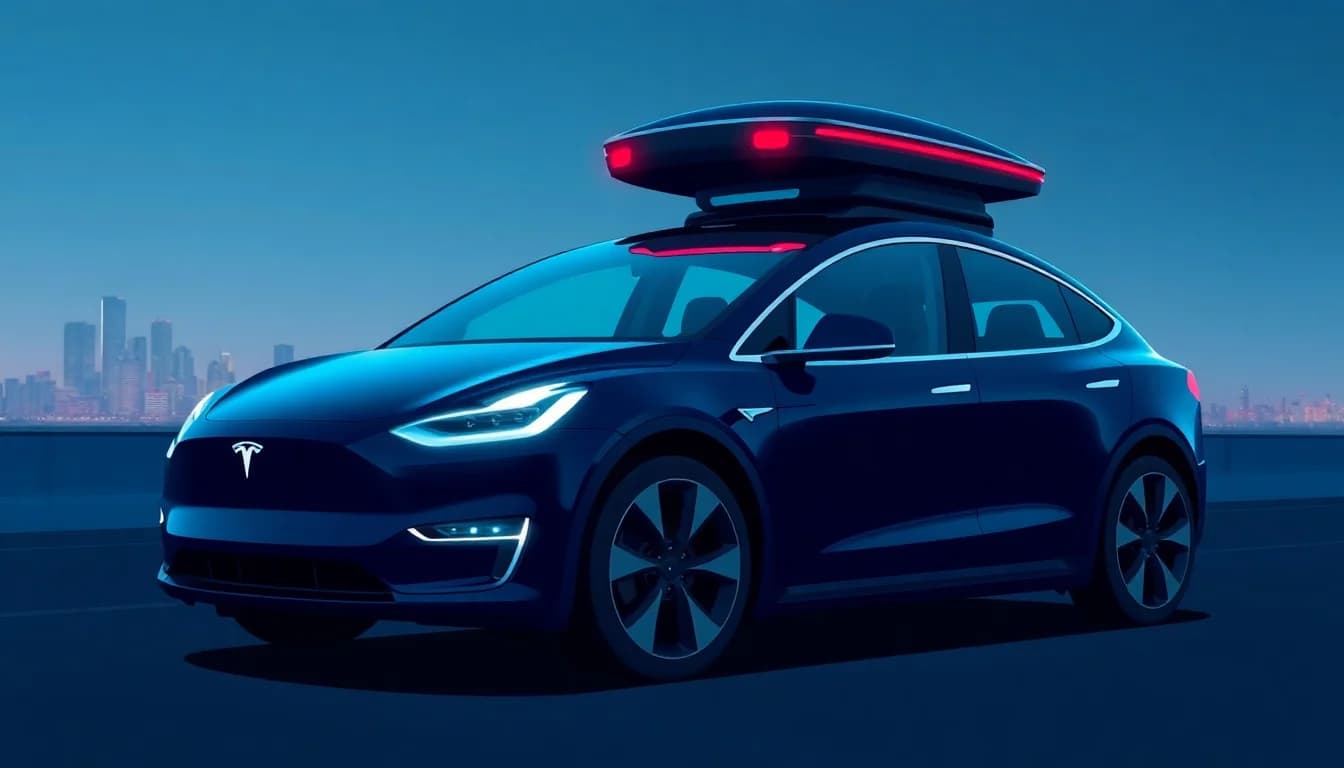
Tesla launched its autonomous Cybercab service in Austin, Texas, allowing public access to vehicles without traditional controls.
Tesla launched its Cybercab service on September 3 in Austin, Texas, offering rides in autonomous two-seater vehicles designed without steering wheels or pedals. Customers can access these vehicles through the Robotaxi service in designated areas of the city.
The future has arrived in Austin pic.twitter.com/RTCb0O5sez
— Tesla (@Tesla) September 3, 2026
The launch event featured discussions led by company executives about the service's pricing and technological advancements. Ashok Elluswamy, the head of Tesla's AI division, confirmed that the service is now open to the general public.
Rides are assigned based on availability and passenger counts, with options for selecting rides limited to the Model Y for now. Although Tesla plans to introduce dynamic pricing, it has not yet revealed exact fare details.
Cybercab Registration in Texas
Currently, Texas authorities report that Tesla has registered a total of 420 autonomous vehicles in the state, including 45 Cybercabs. This is smaller than Waymo's fleet of 988 vehicles operating in Texas.
Production of the Cybercab commenced in April 2026, following its introduction in October 2024 as a taxi designed for autonomous use, complete with gull-wing doors and wireless charging capabilities.
Elon Musk expressed confidence that the Cybercab could become Tesla's leading model and a cornerstone of a global robotaxi network. He had previously suggested a target price under $30,000, but no pricing details were provided at the launch.
Opportunities for Third-Party Operators
In addition, Tesla has begun offering Cybercabs for sale to businesses and individual operators for commercial use, signaling a shift in strategy to accelerate network expansion through partnerships. Specific terms for these purchases remain undisclosed.
The existing Robotaxi service operates the Model Y in cities such as Austin, Dallas, Houston, and extends to Miami, Orlando, and Tampa.
Regulatory Scrutiny
Following the launch, the National Highway Traffic Safety Administration (NHTSA) announced on September 4 an investigation into about 1,000 Cybercabs to assess compliance with federal safety regulations. The focus will be on how Tesla verified that the vehicles meet safety standards in the absence of traditional controls like steering wheels and pedals.
Federal rules restrict the commercial sale of vehicles lacking conventional features, although testing is permitted without such limitations. In California, Tesla is still awaiting necessary permits for operating fully autonomous vehicles without a safety driver.
Tesla first introduced Robotaxi rides in Austin with the Model Y in June 2025 as part of a limited rollout, initially supervised by an onboard company employee. By December, tests began on robotaxis operating without a driver present.