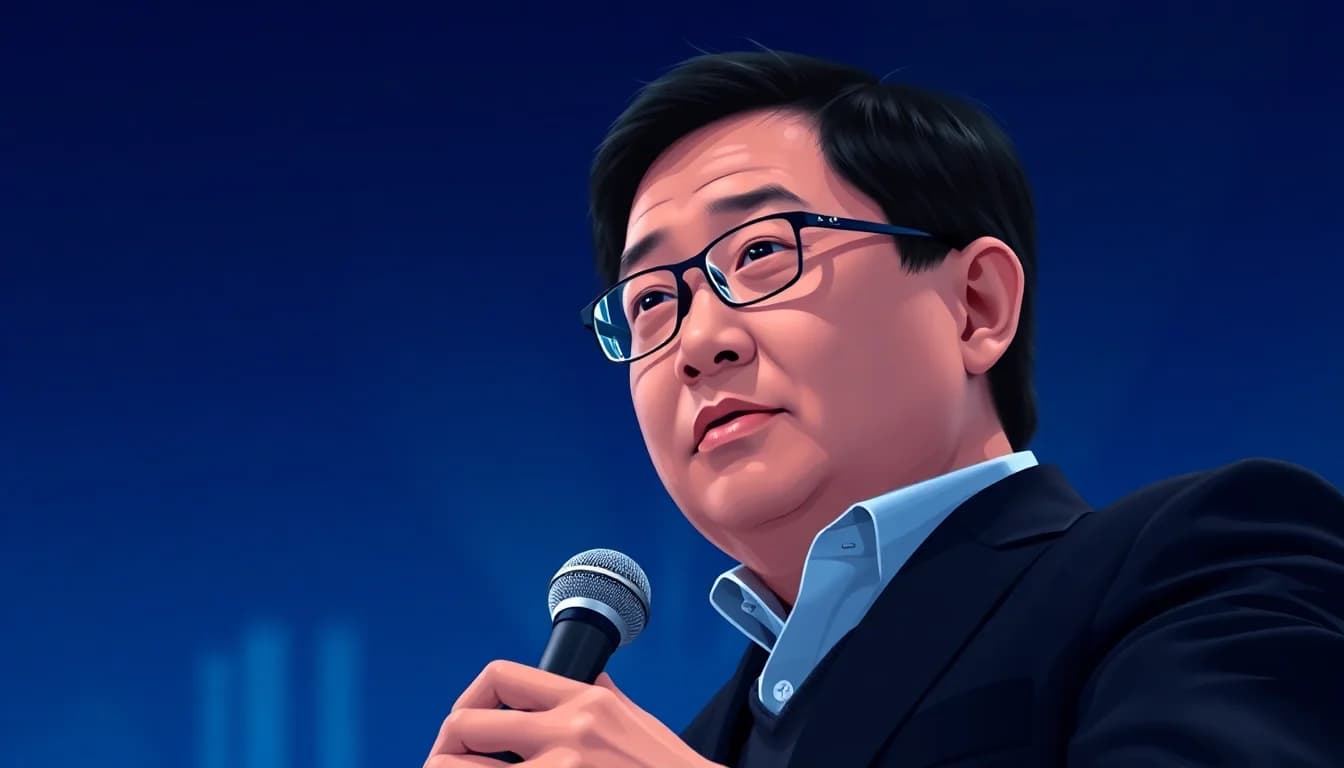
Jensen Huang, the CEO of Nvidia, emphasized that the safety of AI systems should be treated as an engineering challenge, advocating for companies to decide the pace of AI development without external regulations. He made these remarks during a conversation with Salesforce CEO Marc Benioff at the Dreamforce conference.
https://youtu.be/2daJ7ufU_Ko?si=0-9hy0l1fhLBYfGD
Benioff raised concerns regarding the ongoing industry debate about slowing down AI development.
“Safety is paramount. But safety is an engineering problem,” Huang stated in response.
He explained that developers are responsible for creating software and computational systems, and they must establish reliable testing environments first. If a company is uncertain about a product's functionality or safety, it should not be released.
“Market forces are already in play. We don’t need new laws. We don’t need new regulations,” he asserted.
Huang also refuted the notion that there is a trade-off between the speed of innovation and safety. He believes that while companies can push technology forward swiftly, they should pause if they lose control of the process or doubt the safety of their products.
His comments followed a recent call from Anthropic CEO Dario Amodei to slow down the development of the most powerful AI models, a sentiment echoed by OpenAI CEO Sam Altman and Elon Musk.
On September 14, amid these discussions, shares of various AI-related firms and semiconductor manufacturers dropped as market participants evaluated the potential impact of a slowdown on demand for computing infrastructure.
The issue of coordination among developers is complicated by antitrust laws. On September 11, OpenAI reached out to U.S. Congress members seeking clarification on whether a collective slowdown in developing advanced models would be seen as anti-competitive.
Amodei suggested that regulating all American developers of advanced models could be the most effective approach. He proposed that voluntary coordination among competitors could involve government participation and a narrow exception from antitrust restrictions.
In July, Nvidia, Meta, Microsoft, and 22 other companies urged U.S. authorities not to impose blanket restrictions on AI models with open weights. Huang then stated that such systems foster innovation, cybersecurity, and the dissemination of technology.