Summary
- The Claude Opus 5 model remarkably created a first-person shooter game using an exceptionally simple prompt, leading to skepticism about the process.
- Subsequent tests confirmed the validity of the results.
- Matt Shumer, the creator behind the Claude-powered game, named his approach the Gauntlet Loop, which involves setting a clear benchmark for the AI and distributing tasks among different critics.
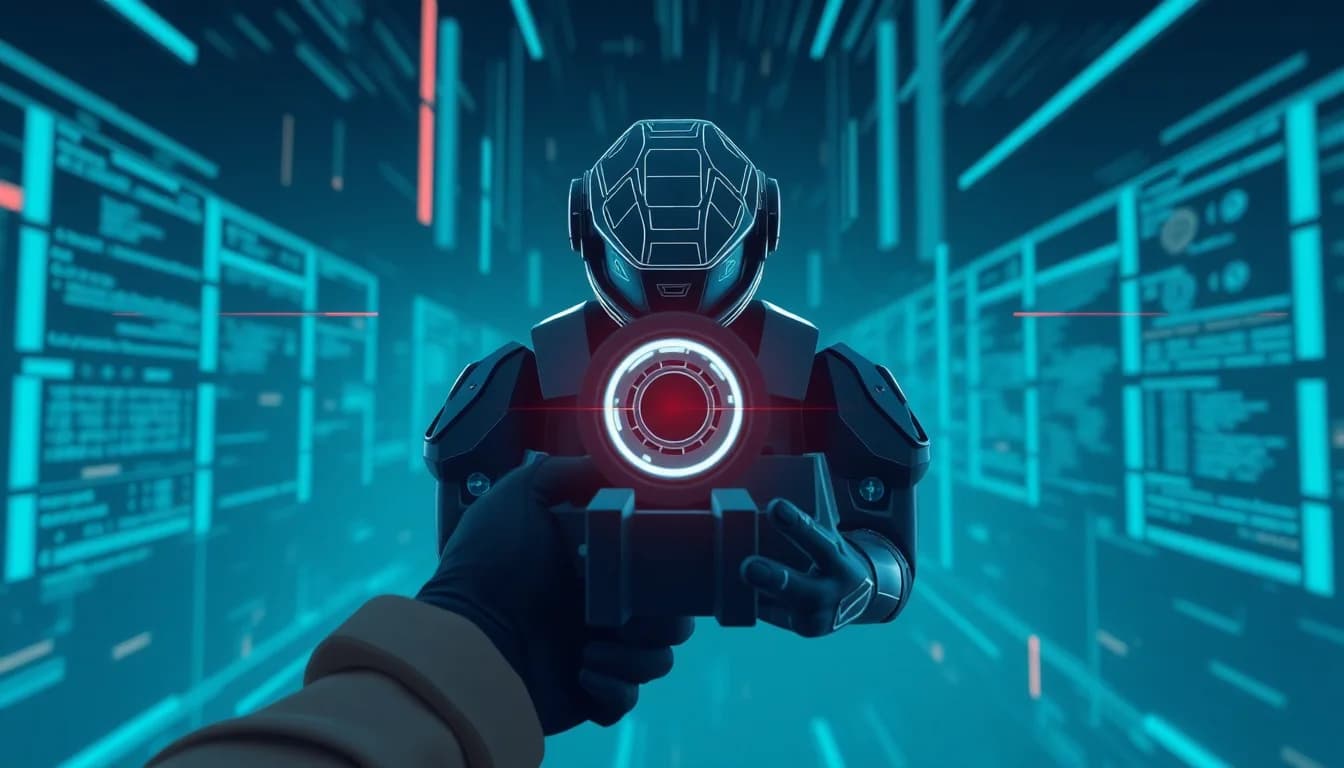
Just days after the release of Claude Opus 5, AI investor and former HyperWrite CEO Matt Shumer shared a video showcasing a fully functional first-person shooter developed entirely by the AI.
Shumer stated, "Claude Opus 5 one-shotted this game," emphasizing that no external assets were utilized in its creation.
One might assume that such a high-quality output would necessitate an elaborate and detailed prompt to navigate the complexities of crafting a sophisticated first-person shooter.
However, that assumption is misguided.
Claude Opus 5 one-shotted this game.
EVERYTHING you see in this demo is custom code... not a single external asset was used.
AI games are going to be amazing.
(sound on) pic.twitter.com/zc7C61kgv1
— Matt Shumer (@mattshumer_) July 25, 2026
The prompt consisted of three concise paragraphs, which are available in full on GitHub. It instructed Opus 5 to create a shooter comparable to the latest Call of Duty titles, delegate tasks to subagents—each with independent memory and specific roles—and continuously refine each component with feedback from a critic until it matched actual Call of Duty footage in a blind comparison. The expected outcome, according to the prompt, was to achieve “utterly perfect” results.
This method contrasts sharply with the conventional guidance provided to prompt engineers, which emphasized specifying criteria rather than vague adjectives. The advice during the vibe-coding boom was to clarify what constitutes "good" instead of merely requesting it. For instance, rather than stating “AAA,” one should outline what the code should take into account.
In Shumer's case, he effectively reversed this approach by instructing his subagents to be "utterly wowed," allowing a critic—created by Opus 5 itself—to define the standards.
That was essentially the entire brief. Shumer later noted that he did not specify the renderer, list the game systems, or clarify what "AAA quality" should encompass. He has since coined the term Gauntlet Loop: giving an agent a tangible, measurable target rather than ambiguous instructions, enabling it to decompose the task into smaller segments, and channeling each segment through a critic that is unaware of the builder's rationale.
Two features of Claude Code facilitate this loop. Subagents operate in isolated context windows with their own instructions and tool access, ensuring that a critic evaluating a weapon model does not inherit the builder's justifications for its appearance. The Ultracode setting in Claude Code encourages the model to maximize its reasoning capabilities and enables it to craft its orchestration plan, distributing tasks across up to 16 agents simultaneously, limited to 1,000 tasks per run.
The built-in /loop skill from Anthropic, designed for iterative fix-test-adjust cycles, prevented the process from halting as soon as the game reached an acceptable quality. Shumer did not impose a limit on the number of iterations, allowing the critic to continuously identify new gaps and prompting the builder to address them for hours until he ultimately concluded the session himself.
The final output operates on Three.js and standard WebGL2, comprising approximately 55,000 lines of code across 11 subsystems. Every texture, mesh, animation, and sound is generated within the browser at load time—there are no pre-downloaded models, HDRIs, image files, or audio files. Shumer's published critic log indicates a score progression from 3.59 out of 10 to just above 5, consistently lagging behind the actual game in each logged round.
Initially, skeptics suspected extensive hidden manual coding, prompting Shumer to release the entire prompt and codebase, sparking a wave of imitators.
Different developers replicate the same strategy
James Altucher, a former hedge fund manager and podcaster, utilized the same prompt, reporting that he invested "a little over ten hours" and around 1.3 million tokens on Opus 5 to create his game, Operation Blackout, which is available to play for free online and looks impressive.
You can try that game here.
The developer behind Prompt Silo targeted OpenAI's competing model with the same request, sharing his results as "Sol 5.6 Ultra with same prompt"—Sol being the top-tier model from the three-model GPT-5.6 series released by OpenAI on July 9, alongside less expensive Terra and Luna versions.
Sol 5.6 Ultra with same prompt. https://t.co/89EhfiCvg0 pic.twitter.com/1xwBQw5nRh
— Rich · Atom Tan Studio (@atomtanstudio) July 26, 2026
Developer Leon Lin took a different approach, opting for a detailed prompt. Instead of mimicking Shumer's concise version, he aimed to "reverse engineer a prompt for this game," creating a comprehensive document with about 20 sections detailing everything from ragdoll physics to cascaded shadow maps. He input this into Cursor using standard Opus 5 on high effort, without using subagents or ultracode, resulting in a market-street shooter named Dust Corridor, which is also playable online and visually appealing.
None of the follow-up projects have undergone the blind testing that Shumer conducted on his own game. His critic log consistently shows the real Call of Duty outperforming every round recorded, setting the benchmark that Altucher and Atom Tan Studio are now striving to meet using his exact three-paragraph prompt, while Leon Lin is attempting to reach with his extensive 20-section approach.
Assessing the Novelty of This Approach
Agentic coding tools like Claude Code function similarly to how a supervised junior engineer might: they analyze files, execute code, review generated screenshots, and delegate tasks to subagents and critics who evaluate the outcomes against predefined objectives. This iterative loop is genuine, and Shumer's Gauntlet Loop is a viable structural method. However, this does not conclusively demonstrate that the model conceived a game purely from imagination, as opposed to reassembling code patterns it had previously learned.
Three.js provides its own pointer-lock camera controls as an official example, and that foundational pattern—mouse-look, WASD movement, raycasting for gunfire—has been replicated and documented extensively across GitHub, forums, and development resources for over a decade. A coding model trained on publicly available repositories has likely encountered numerous nearly identical shooters before it even processed Shumer's prompt.
This does not invalidate Claude of Duty, but it complicates the claim of being "built from scratch," suggesting a cautious interpretation of the results. Researchers examining code-generating models refer to this broader issue as data contamination, where a model excels at a task primarily due to having seen closely related examples in its training data, rather than through innovative reasoning.
None of the initial first-person shooter projects have assessed for this type of contamination. Shumer's repository does showcase Claude’s own creative outputs, if that term is applicable. This leads to a perspective where "one-shotted a AAA game" is better understood as a capable agent operating within one of the most thoroughly documented programming genres, rather than as definitive proof that an AI independently created a shooter without any prior influences.