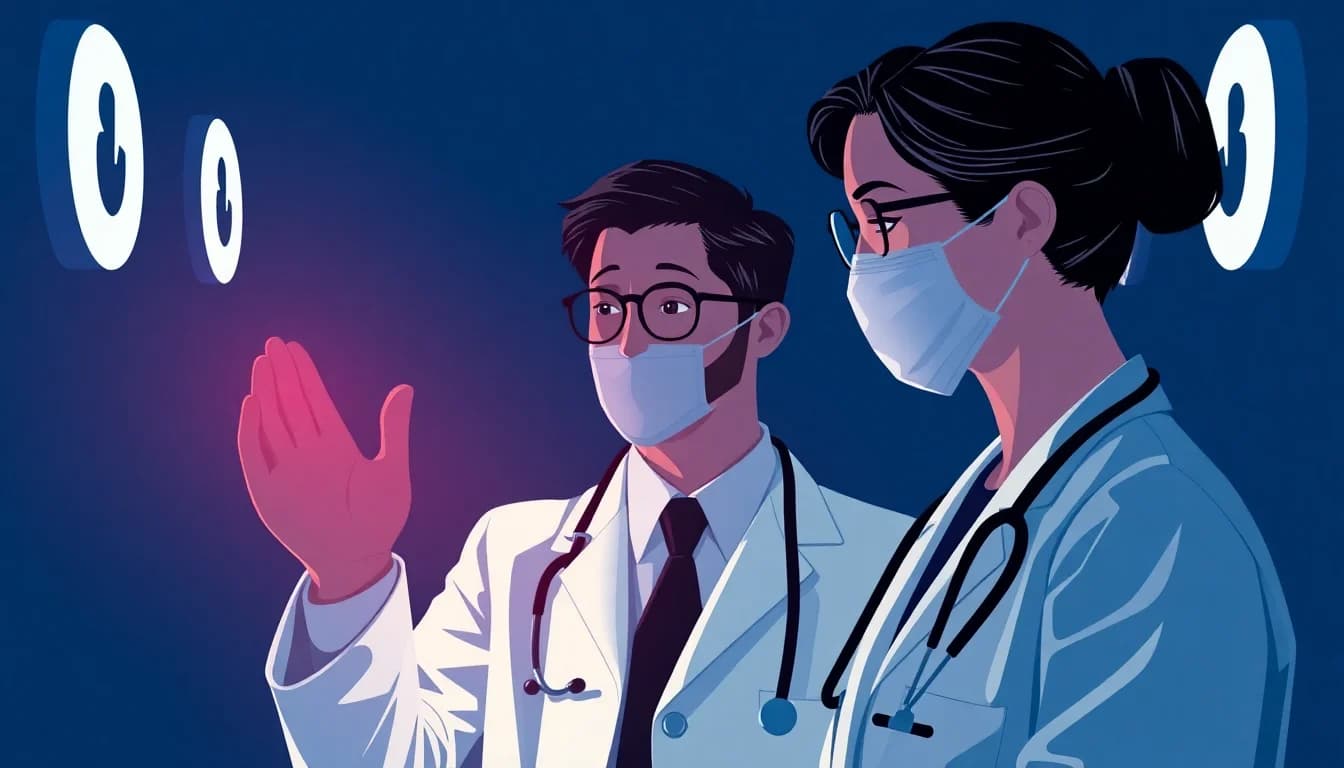
Accounts created by artificial intelligence that mimic doctors have gained millions of views on TikTok, propagating misleading health advice. This information comes from a report by The Guardian, which cites research conducted by the marketing agency Hallam.
The publication clarified that the findings are not academic in nature. The researchers analyzed a total of 1,198 videos, focusing on the top 50 clips derived from various search queries such as "health tips," "doctor advice," "nutrition tips," and "mental health tips."
Hallam assessed the videos manually for signs of AI generation or manipulation, including synthetic voices, visual artifacts, repetitive scripts, subtitle styles, AI-generated music, and other indicators. However, they noted that this methodology does not fully verify the origin of the videos.
According to the study, approximately 40% of the trending TikTok health videos displayed characteristics of AI generation or manipulation, with the percentage rising to 84% for those specifically tagged "health tips."
Source: Hallam.The Guardian identified several debunked claims within these videos regarding cancer causes, suggesting that factors such as reheating food in plastic containers, using deodorants, and sleeping next to a phone could lead to the disease. These assertions were refuted by Cancer Research UK, which stated that they lack reliable scientific backing.
Other videos promoted dubious remedies, such as a mixture of Coca-Cola and onion for pain relief and a product called Hyalethinap Plus Pro Max as an anti-aging solution. The Guardian was unable to find any credible evidence supporting the existence of this product online.
Emma Ranswick, vice chair of the British Medical Association, expressed concern that these accounts foster medical myths and "miracle cures." She emphasized that platforms like TikTok need to take more decisive action against dangerous fake health advice.
Frances Swords, the NHS's medical director, noted that physicians increasingly encounter patients who are confused or frightened by false advice designed solely for views. Victoria Tzortziou Brown, president of the Royal College of GPs, warned of the potential for real harm.
Alex Rouhani, a health misinformation researcher from UCL, characterized the situation as a large-scale exploitation of trust.
A TikTok spokesperson challenged Hallam's conclusions in a statement to The Guardian, asserting that the platform actively removes harmful medical misinformation, including AI-generated content, and collaborates with the World Health Organization and the NHS. The company has also deleted the examples of videos provided by journalists.
According to the platform's guidelines, creators are required to label realistic AI-generated content that includes images, audio, or video. TikTok also prohibits harmful misinformation and misleading content that impersonates others.
In February, Science Feedback described a network of TikTok accounts featuring AI-generated medical personas. These accounts shared questionable advice and used the likenesses of actual professionals without proper labeling. Following a complaint, the platform removed accounts that violated impersonation rules.
The Guardian also highlighted concerns regarding TikTok's shift towards greater use of AI moderation. In 2025, it was reported that the platform was cutting back on teams responsible for user safety and video verification, including plans to lay off some UK employees. Former moderators told The Independent that automated systems are not yet fully reliable in assessing contentious content.
It is worth noting that in November 2025, TikTok announced a tool to limit AI-generated content in feeds. The platform also planned to integrate "invisible watermarks" that would be more difficult to remove when videos are re-uploaded or edited.