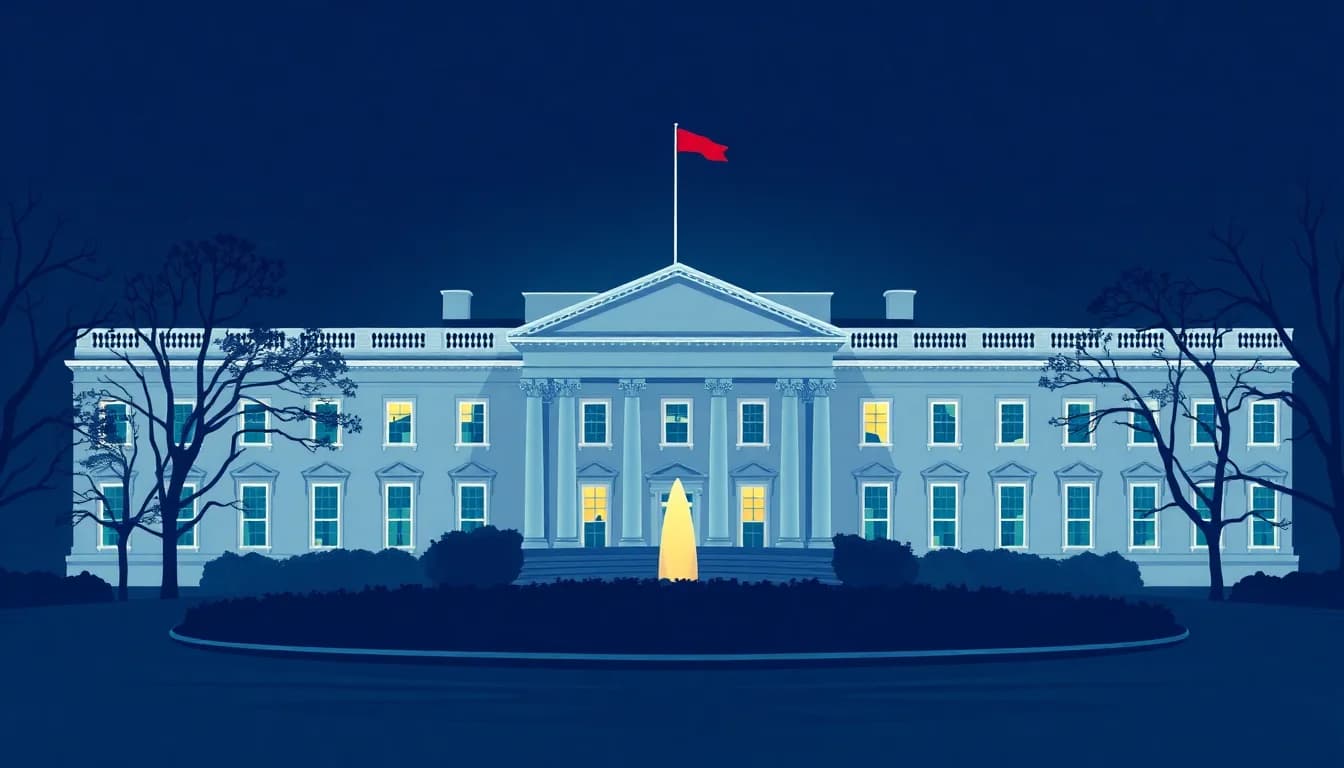
Administration officials are reportedly set to meet with law enforcement representatives who have raised concerns regarding the bill's provisions on illicit finance.
By Jesse Hamilton|Edited by Nikhilesh DeUpdated Jun 29, 2026, 3:27 p.m. Published Jun 29, 2026, 3:23 p.m. 4 min readMake preferred on ShareShare this articleCopy linkX (Twitter)LinkedInFacebookEmailMake preferred on The White House is preparing to engage law enforcement groups to clarify provisions of the Clarity Act. (Jesse Hamilton/CoinDesk)SummaryShow- The White House is set to meet with law enforcement representatives as part of efforts to advance the Senate's crypto market structure bill.
- While law enforcement groups criticize the Clarity Act's protections for crypto developers, the industry argues it offers essential tools and that its absence would hinder crime-fighting efforts.
According to a source familiar with the plans, the White House has scheduled a meeting on Monday with law enforcement organizations that have expressed concerns about the U.S. Senate's crypto market structure bill, particularly regarding its measures against illicit finance.
The focus of the discussion centers around a section of the Digital Asset Market Clarity Act, known as the Blockchain Regulatory Certainty Act, which aims to protect software developers from being classified as "money transmitters" if they do not intend to control the tools they create. This protection is deemed vital for fostering the development of decentralized finance (DeFi) projects.
Organizations like the National Sheriffs Association have voiced significant concerns about this language, even as some law enforcement officials have shown support for the bill.
In a May letter to Senate Banking Committee leaders, the sheriffs' group argued, "No good reason supports giving mixers, tumblers, and DeFi a blanket exemption. While some software developers may not engage in money transmitting or other activities requiring BSA regulation, many others do."
White House officials, particularly lead crypto advisor Patrick Witt, are focused on advancing the Clarity Act in the Senate, having previously met with stakeholders including law enforcement and Wall Street representatives. Requests for comment from the White House regarding the upcoming meeting went unanswered, leaving details unclear.
Industry advocates, such as the Blockchain Association, have defended the bill's provisions aimed at combating crime, asserting that it equips authorities with new powers to tackle bad actors, and that failing to enact new legislation would create a regulatory void.
At a recent industry event, Witt stated, "We are imposing real regulatory constraints on businesses and actors that currently operate in uncertainty." He added that law enforcement should be strong supporters of this legislation, as it addresses significant gaps in the current framework.
Conversely, political opponents of the Clarity Act, including Senator Elizabeth Warren, the leading Democrat on the Banking Committee, have consistently criticized the bill's handling of illicit finance. They frequently highlight the role of cryptocurrency in facilitating criminal enterprises, drug trafficking, and human trafficking.
Senate Majority Leader John Thune has reportedly indicated that he aims to bring the Clarity Act to a vote on the Senate floor soon, despite ongoing debates over several contentious provisions. Reports suggest he may proceed with a vote regardless of Democratic readiness.
Banking Committee Chairman Tim Scott announced on social media that the Senate should aim to vote on crypto market structure legislation in July.
However, for the bill to pass, it requires 60 affirmative votes in the Senate, necessitating substantial support from Democrats, and there are only about four weeks of Senate floor time remaining before the summer recess. Discussions continue regarding the BRCA, increasing the Commodity Futures Trading Commission's capacity, and an ethics provision that would prevent senior government officials from having personal stakes in the crypto industry.
Numerous lawmakers have stated they will not support the bill unless it adequately addresses potential conflicts of interest for government officials, including the Democrats who previously voted in favor during the Senate Banking Committee's markup.
Additionally, Congress is currently dealing with President Donald Trump's refusal to sign a significant housing affordability bill that has been sent to him. Trump has asserted he will not approve any legislation until lawmakers pass a voter-identification bill that would impose stringent requirements for proving citizenship. It remains uncertain if this refusal will extend to the Clarity Act, but the housing bill is expected to be officially presented to him, testing the implications of his resistance, which could result in automatic approval unless he vetoes or signs it within the constitutional 10-day window.
Jaret Seiberg, a policy analyst at TD Cowen, noted in a statement that he anticipates the housing bill will become law despite Trump's recent cancellation of the signing ceremony, suggesting that it is unlikely he will veto the significant legislation. "According to our calculations, this means the bill will become law on Friday, July 10, unless the President vetoes it or signs it earlier," he remarked.
Read More: In Clarity Act's final weeks, its path through U.S. Senate not getting much clearer
White HouseClarity ActCrimeDeFiExclusiveLatest Crypto News- 1Private keys, not smart contracts, caused 40% of crypto's $16 billion hack losses. Here's what's being done.15 minutes ago
- 2J.P. Morgan broadens blockchain settlement network as banks modernize cross-border payments37 minutes ago
- 3Crypto analytics firm Chainalysis proposes standards for blockchain tracing 52 minutes ago
- 4MiCA's looming deadline could leave 10 million crypto users without a platform in the EU56 minutes ago
- 5Ripple wants institutions to borrow against tokenized assets on XRPL1 hour ago
- 6Wall Street's BNY expands stablecoin services for institutions, starting with Circle's USDC1 hour ago
- 7Strategy opens door to selling billions of bitcoin under new capital plan. Here's what it means1 hour ago
- 8Ukraine transfers $8.3 million in seized crypto amid potential plans for strategic reserve1 hour ago
- 9BlackRock pushes deeper into DeFi with Ethena integration, sending ENA up 8%1 hour ago
- 10Kalshi and Polymarket could become M&A targets as prediction markets consolidate: Bernstein3 hours ago
The Evolution of the Crypto CEX Landscape: A Case Study on Binance
The Evolution of the Crypto CEX Landscape: A Case Study on Binance
Binance remains crypto’s leading exchange, expanding from spot and derivatives into RWAs, payments, savings, yield, and broader financial services.
By CoinDesk Research5 hours agoCommissioned byBinanceBinance remains crypto’s leading exchange, expanding from spot and derivatives into RWAs, payments, savings, yield, and broader financial services.
Why it matters:
Binance remains crypto’s leading exchange, expanding from spot and derivatives into RWAs, payments, savings, yield, and broader financial services.
View Full ReportMore From Policy