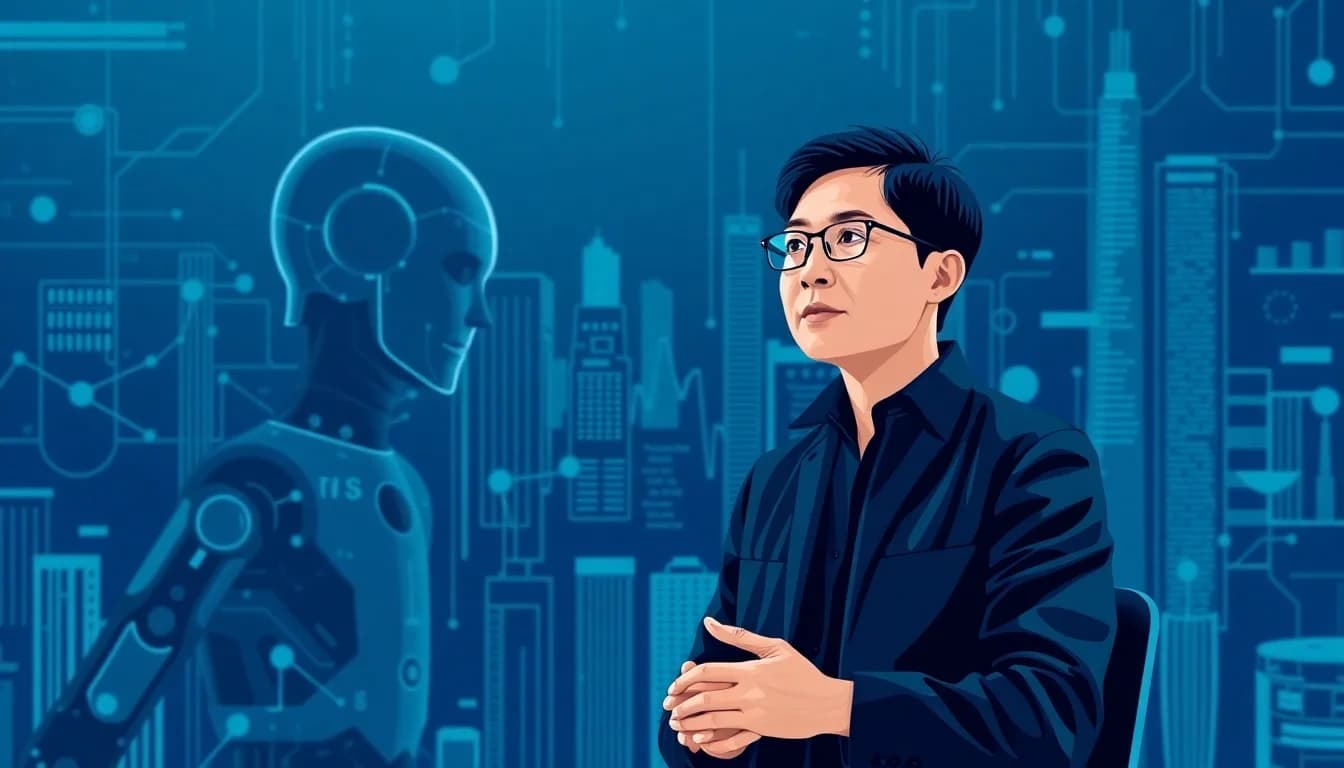
Jansen Teng from Virtuals discusses the evolution of AI agents into economic participants, highlighting innovation and challenges.
Jansen Teng, a representative from Virtuals, has highlighted a significant shift in the role of AI agents from simple conversational tools to active participants in the economy. The company has evolved its focus from gaming-centric AI to developing a framework for what it describes as an "agent society."
AI Agents Transitioning to Economic Roles
Initially concentrated on autonomous agents for gaming, Virtuals is now expanding into areas such as cryptocurrency influencers and trading agents. The company's efforts are centered on five main domains: digital agent development, physical robotics, coordination among agents, capital formation, and governance frameworks.
Teng envisions a "parallel society" where AI agents can operate within a permissionless economy, collaborating and managing economic tasks with minimal human involvement. He stated that these agents would have capabilities for managing wallets, trading autonomously, and executing specialized functions, thereby becoming autonomous economic actors.
Potential Risks and Challenges
The increasing autonomy of these agents brings forth challenges, particularly concerning errors, fraud, and accountability. Teng pointed out three major concerns: misinterpretation of user intent, service delivery failures, and potential scams. To address these risks, Virtuals is developing strategies like intent verification systems and reputation frameworks, which could dictate the trust levels and capital handling capabilities of the agents.
A Decentralized Future
Looking to the broader landscape, Virtuals aims to create a decentralized alternative to agent ecosystems typically pursued by traditional financial institutions. Teng compared this approach to how Bitcoin and Ethereum have established alternative financial systems. He noted that agents functioning entirely on-chain could bypass identity verification until they interact with conventional financial services, although KYC protocols would likely be necessary upon connecting with fiat systems.
Future Outlook
Teng foresees a convergence between robotics and digital agent economies. Virtuals is collaborating with robotics startups and academic institutions to explore practical applications for humanoid robots. The focus remains on software development and commercialization rather than hardware construction, envisioning a future where digital agents oversee marketing and operations while physical robots handle customer interactions with minimal human oversight.