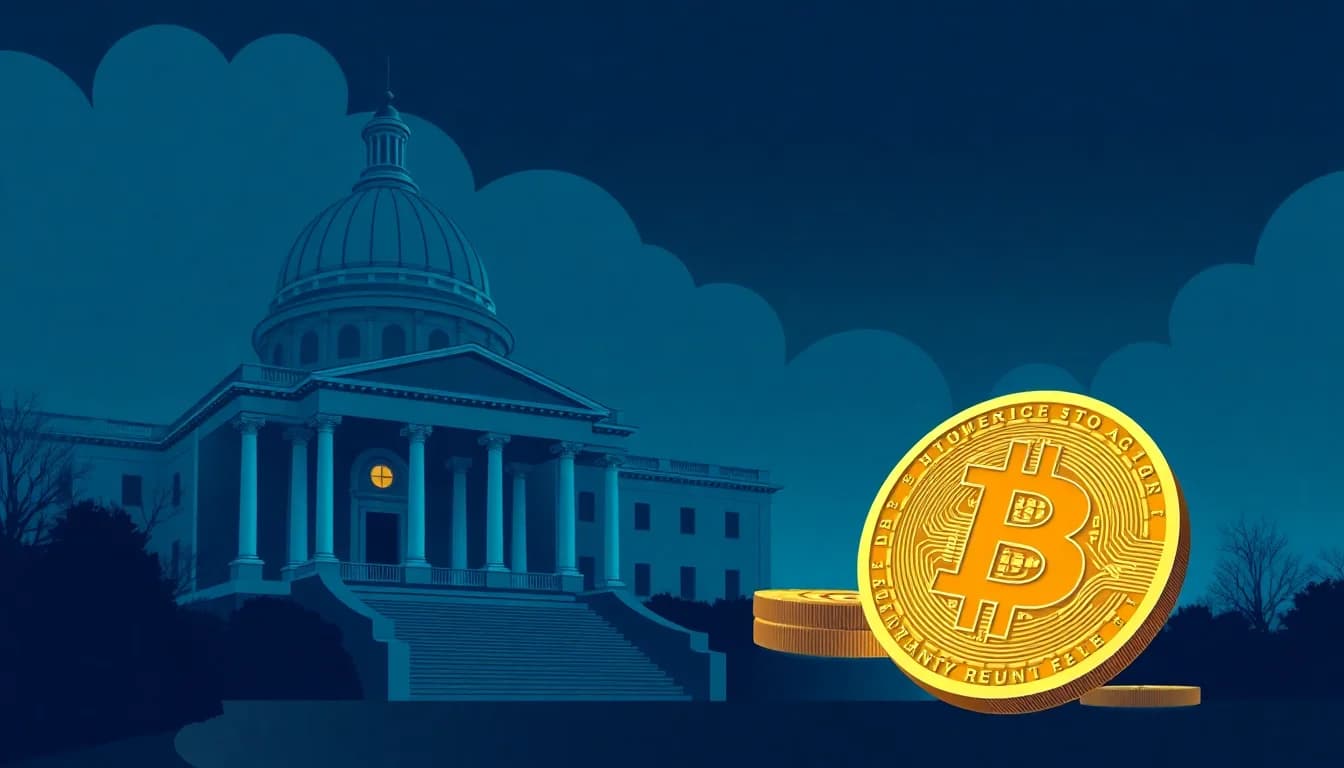
The House Financial Services Committee has approved a bill aimed at establishing a strategic Bitcoin reserve at the federal level. The vote saw 28 lawmakers in favor and 21 against the proposal.
Introduced in May by Republican Nick Begich and Democrat Jared Golden, the American Reserve Modernization Act (H.R. 8957) was amended before the vote with a new version proposed by Republican Brian Stile.
The bill will now proceed to a vote in the full House of Representatives, after which it must pass through the Senate and receive the President's signature.
Operational Framework of the Reserve
If enacted, the legislation will require the U.S. Department of the Treasury to create a strategic Bitcoin reserve and a separate storage facility for other digital assets within 180 days.
Federal agencies will be tasked with cataloging the cryptocurrencies under their control. Bitcoin owned by the government and not earmarked for other purposes will be transferred to the reserve. This includes coins that have been permanently confiscated unless they need to be returned to victims or allocated for legally mandated payments.
Other digital assets will be stored separately. The Treasury will be allowed to sell these assets according to pre-established rules, with proceeds first covering management costs of both funds, and any remaining amount directed towards reducing the national debt.
Bitcoin transferred to the reserve will be prohibited from being sold, exchanged, pledged, or utilized in any manner for a period of 20 years following the law's enactment.
Two years before the end of this period, the Treasury must present Congress with recommendations regarding the future of the coins. Subsequently, the department may propose selling no more than 10% of the reserves within any two-year timeframe, although such proposals will not automatically authorize the sale of the assets.
To ensure oversight of the reserves, annual reports with cryptographic proof of ownership will be required, along with independent audits and monitoring by the U.S. Government Accountability Office.
States will have the option to voluntarily transfer their Bitcoin holdings for safekeeping by the Treasury. These assets will be placed in separate accounts, with ownership remaining with state authorities.
The bill does not permit the government to make immediate additional purchases. Instead, the Treasury and the Department of Commerce must explore ways to replenish the reserve without new taxes, borrowing, or increasing the national debt within 180 days.
"This is a prudent financial strategy that will strengthen our reserves while also helping to reduce the deficit. Digital assets continue to reshape the global market. We must modernize our strategic reserves to maintain U.S. leadership and financial stability," stated Stile during the meeting.
Democrat Bill Foster opposed the initiative back in July, citing the volatility of the leading cryptocurrency and questioning its relevance to the American economy.
Changes Made Prior to the Vote
The initial version from May proposed quarterly public reports on the reserves, which were replaced with annual reporting in the version approved by the committee.
The mandatory holding period for assets acquired through forks and airdrops was reduced from five years to one year.
The list of potential methods for replenishing the reserve was amended to remove the revaluation of Federal Reserve gold certificates, the transfer of profits from reserve banks, tax and customs revenues, and donations.
The Treasury and Commerce Department's study will focus on utilizing other government crypto assets, confiscations, and collaborative programs with states, private companies, and foreign partners.
It is noteworthy that President Donald Trump established a strategic Bitcoin reserve via an executive order on March 6, 2025. However, the establishment of the reserve has been delayed due to disagreements among federal agencies over the fund's structure and asset management protocols. For further insights into why this American initiative has been limited to the storage of confiscated Bitcoins and how other countries have progressed, refer to the longread on ForkLog.