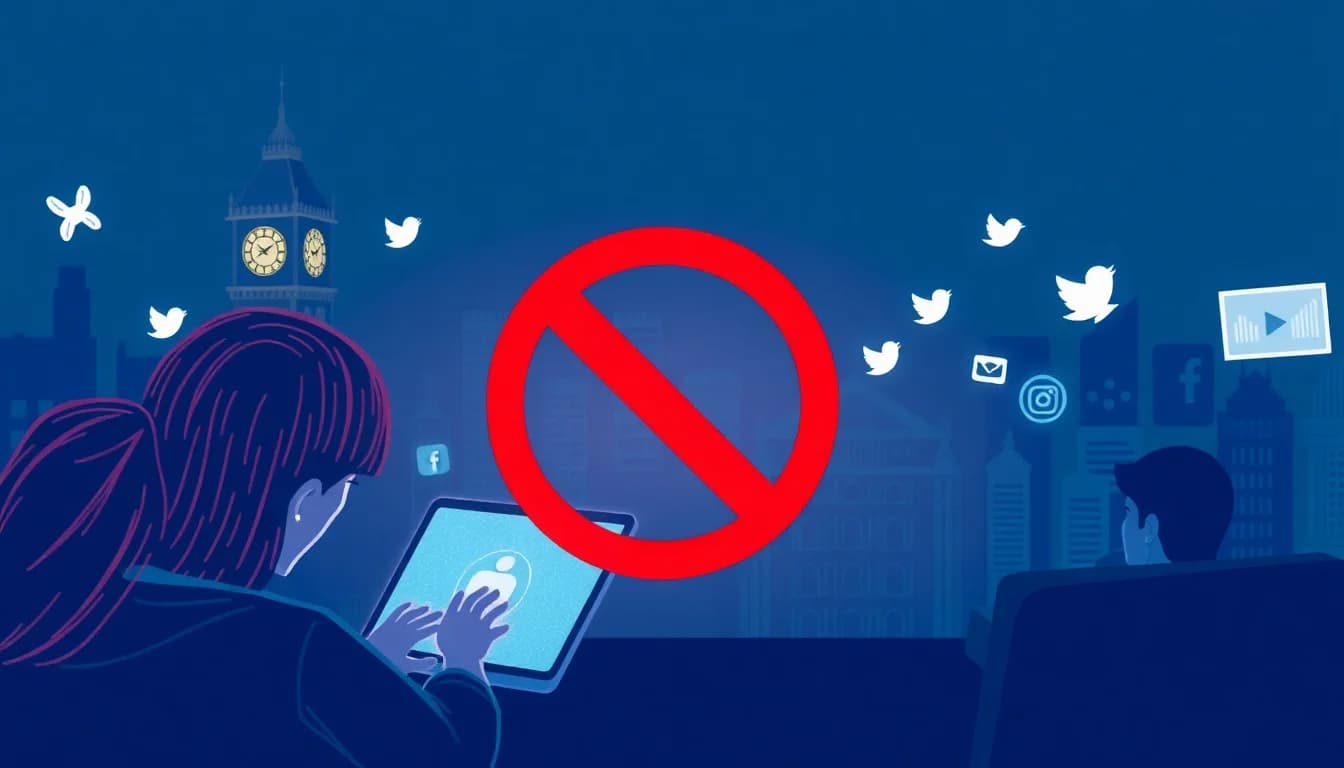
The UK government will impose restrictions on social media use for citizens under 16 years old.
Relevant regulations are expected to be enacted by the end of December, allowing authorities to implement initial measures by spring 2027.
The ban will follow the Australian model and will affect platforms with algorithmic feeds and user-generated content, including Snapchat, TikTok, YouTube, Instagram, Facebook, and X.
WhatsApp and Signal will not be included. Exceptions will be made for educational and commercial platforms, as well as music streaming services.
“Parents want their children to be safe and happy, but the world of online technology has made this harder than ever. [...] That’s why we are going further than any other country in the world by banning social media for those under 16 and introducing broader protective measures to give children back their childhood,” said Prime Minister Keir Starmer.
At the same time, authorities will tighten rules for minors on other online services, including gaming platforms. Users under 16 will have live streaming and communication with strangers disabled.
In July 2026, authorities promised to present separate decisions regarding a “curfew” and breaks in feeds for children under 18.
Additional requirements are being prepared for AI platforms. Chatbots simulating romantic or sexual relationships with users will need to set a minimum age of 18. Similar features across a broader range of services will be restricted for minors.
Ofcom will conduct an expedited study on age verification mechanisms. Technology Minister Liz Kendall has requested an urgent review of the regulator's enforcement capabilities regarding the new rules and promised additional funding.
Background of the Ban
The announcement of the restrictions followed public consultations titled Growing up in the Online World, which involved over 116,000 participants.
According to the results of the survey, nine out of ten parents supported the ban on social media for children under 16. Two-thirds of young respondents agreed that teenagers should not use at least some platforms.
The UK already has the Online Safety Act, which restricts phone use in classrooms. However, authorities are actively seeking to expand online control mechanisms.
In early June, Starmer gave Apple and Google three months to implement built-in mechanisms to block explicit images on smartphones and tablets owned by Britons under 18. Otherwise, the government promised to take action in the form of fines and restrictions.
In the fall of 2025, the Prime Minister also announced plans to introduce mandatory digital IDs for workers, but the idea was abandoned due to a strong public backlash.
Initially, the government insisted on widespread use of BritCard to combat illegal labor, but has now shifted to introducing optional digital identification.
Chair of the UK Home Affairs Committee Karen Bradley described the attempt to implement digital IDs as a “fiasco.” She noted that the public generally supported the transition from paper IDs to digital ones before citizens were “scared off” by poorly explained plans.
Public Reaction
Public opinion on the introduction of social media restrictions for teenagers is divided. Generally, the measures are supported by the older generation.
Many are concerned about online bullying, the risk of harassment, and harmful content. In interviews with the BBC, parents expressed worries about their children potentially becoming victims of these issues.
However, Ian Russell, whose daughter took her own life at 14, accused the government of hastily implementing restrictions for political reasons. He believes that “heavy-handed methods” only create more problems.
At the same time, teenagers themselves have expressed concerns about how the social media ban will affect their communication with friends and self-expression.
“We’ve already outgrown the point where we need to be told what to do,” said 14-year-old George on a radio broadcast.
Meta representatives have also commented on the situation stating that the ban will not achieve the goal of ensuring teenagers' safety online.
“As we see in Australia, bans risk isolating teenagers from online communities and information, pushing them towards unregulated alternatives that lack built-in protections and parental controls,” the company added.
YouTube and Snapchat have also criticized the restrictions.
Telegram founder Pavel Durov posted separately on this topic, arguing that the bans only put children in greater danger.
“Teenagers will be forced to use VPNs — and they will be able to unlock much more dangerous illegal content. [...] Parents already have tools to limit their children's digital habits: parental controls, screen time, or no smartphones at all. Instead, many parents give their toddlers an iPad to keep them quiet,” he emphasized.
It is worth noting that on July 1, 2025, the Chinese government launched digital IDs for online use, transferring the responsibility for citizens' online identification from private companies to the state.