Summary
- Trump announced he has postponed the signing of an AI executive order, fearing it could hinder U.S. advancements in AI.
- The initiative aimed to establish a voluntary framework for AI firms to share cutting-edge models with the government prior to their public launch.
- During a recent meeting, Trump stated that Chinese President Xi Jinping recognized the U.S. superiority in AI technology.
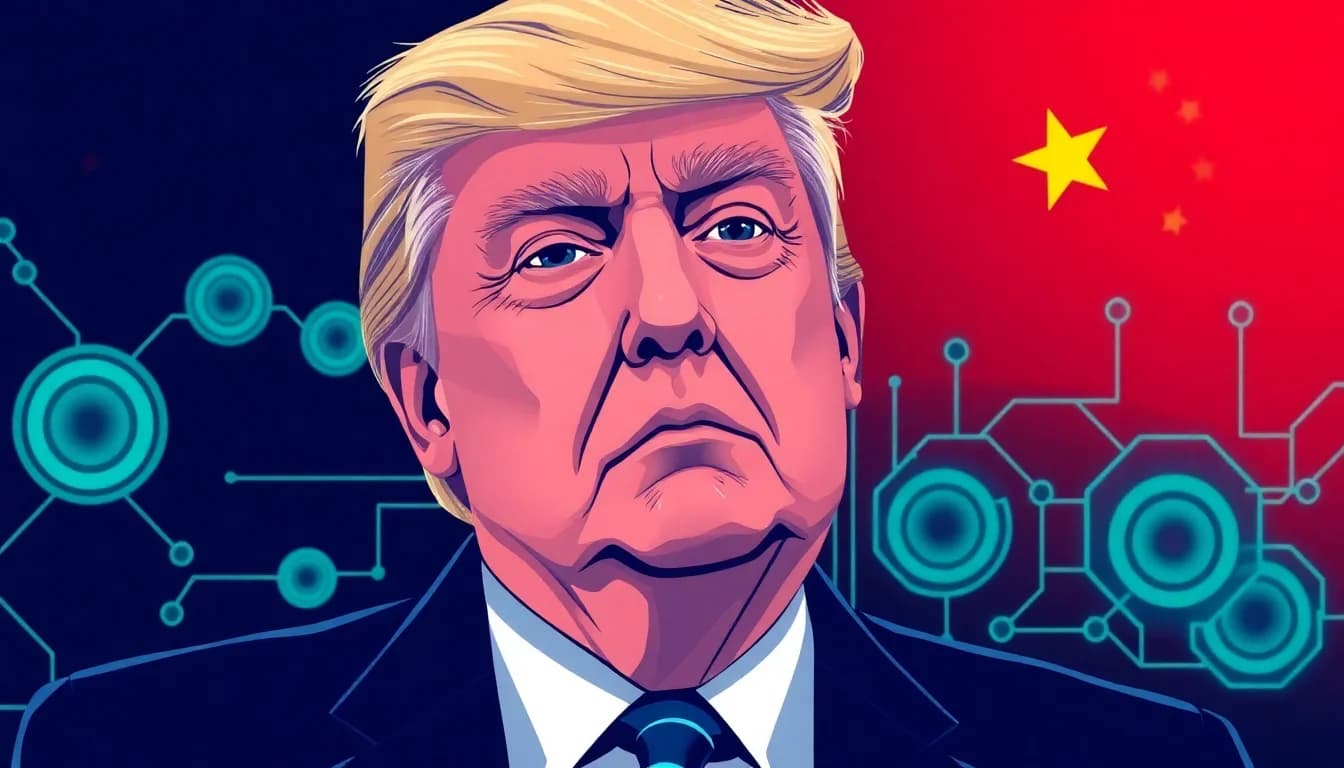
On Thursday, President Donald Trump revealed he has put on hold the signing of an executive order concerning artificial intelligence after concluding that certain elements of the draft might compromise the United States' competitive edge against China.
“I didn't like certain aspects of it,” Trump informed reporters in the Oval Office. “I think it gets in the way of—we’re leading China. We’re leading everybody. And I don’t want to do anything that’s going to get in the way of that lead.”
He did not elaborate on which specific sections he found objectionable or when the administration might reconsider the order.
This statement was made during a press conference that also covered the administration's decision to roll back environmental regulations related to refrigeration equipment, part of a larger effort by the White House to deregulate, aimed at reducing consumer costs and reversing what it sees as detrimental policies from the Biden administration.
Initially announced earlier this month, the executive order was intended to create a voluntary review process whereby AI companies would grant the federal government early access to advanced models for national security assessments prior to their public release.
This proposal would have permitted essential infrastructure providers, including banks, to access covered models before their general availability, and included a cybersecurity clause designed to detect vulnerabilities in unreleased AI systems.
Concerns regarding the national security risks posed by advanced AI models have intensified among U.S. officials, particularly following demonstrations by Anthropic’s Claude Mythos, which showcased its capability to discover hundreds of software vulnerabilities and perform complex cyber operations autonomously during testing. Concurrently, AI companies like OpenAI, Google, and xAI have been strengthening collaborations with U.S. defense and intelligence bodies, with the NSA reportedly operating Mythos on classified networks despite an ongoing dispute with Anthropic, as reported by Axios.
In spite of the legal conflict with Anthropic, Trump expressed his support for AI development, viewing it as a catalyst for economic progress, but cautioned that the executive order could impose unwarranted barriers on the industry.
“I really thought that could have been a blocker and I want to make sure that it’s not,” he stated.
At the press conference, Trump mentioned that he spoke about AI with Chinese President Xi Jinping during a meeting last week. “He acknowledges how well we’re doing,” Trump remarked. “It was the two of us—the two countries are fighting for it. Other countries are way behind. I postponed that signing because I didn't like what I was seeing.”