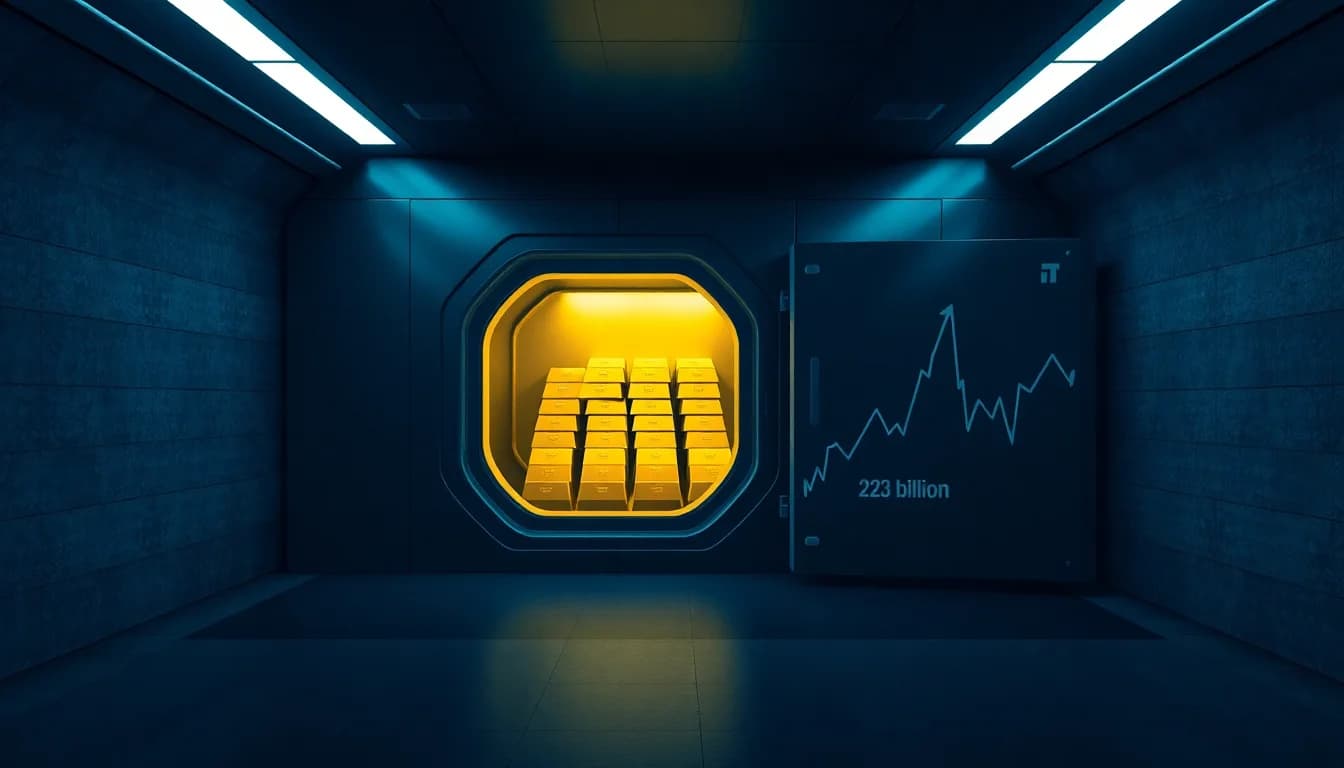
Tether Holdings has secured $23 billion in gold, stored in a former Swiss nuclear bunker, positioning itself as a leading gold holder.
Tether Holdings SA has converted a former Swiss nuclear bunker into a secure facility for its substantial gold reserves. CEO Paolo Ardoino disclosed in a Bloomberg interview that this site is heavily fortified, reminiscent of settings from espionage films.
The company now possesses around 140 tons of gold worth approximately $23 billion, positioning it as one of the largest private gold holders globally.
Each week, Tether receives over a ton of gold bars for storage, and Ardoino indicated that the company plans to sustain this acquisition rate, revising its strategies on a quarterly basis.
In the past year, Tether has purchased over 70 tons of gold, a volume surpassed only by Poland among central banks.
Ardoino likened Tether's market position to that of a central bank, driven by the need to diversify its reserves in response to concerns about fiat currency devaluation and skepticism toward U.S. government bonds.
To enhance its asset management capabilities, Tether recruited two prominent traders from HSBC and intends to not only safeguard the gold but also engage in trading activities, challenging established financial entities. Ardoino expressed his ambition to establish "the best gold trading platform in the world."
The gold reserves back both the USDT stablecoin and Tether's Tether Gold token (XAUT).
Market analysts consider Tether's gold strategy a significant influence, linking it to the ongoing surge in gold prices. The World Gold Council has acknowledged Tether's role as a contributor to this price rally.
Additionally, Tether is diversifying its investments by acquiring stakes in mining royalty companies.
By the end of September 2025, Tether's reserves were projected to match those of central banks in South Korea, Greece, and Hungary.