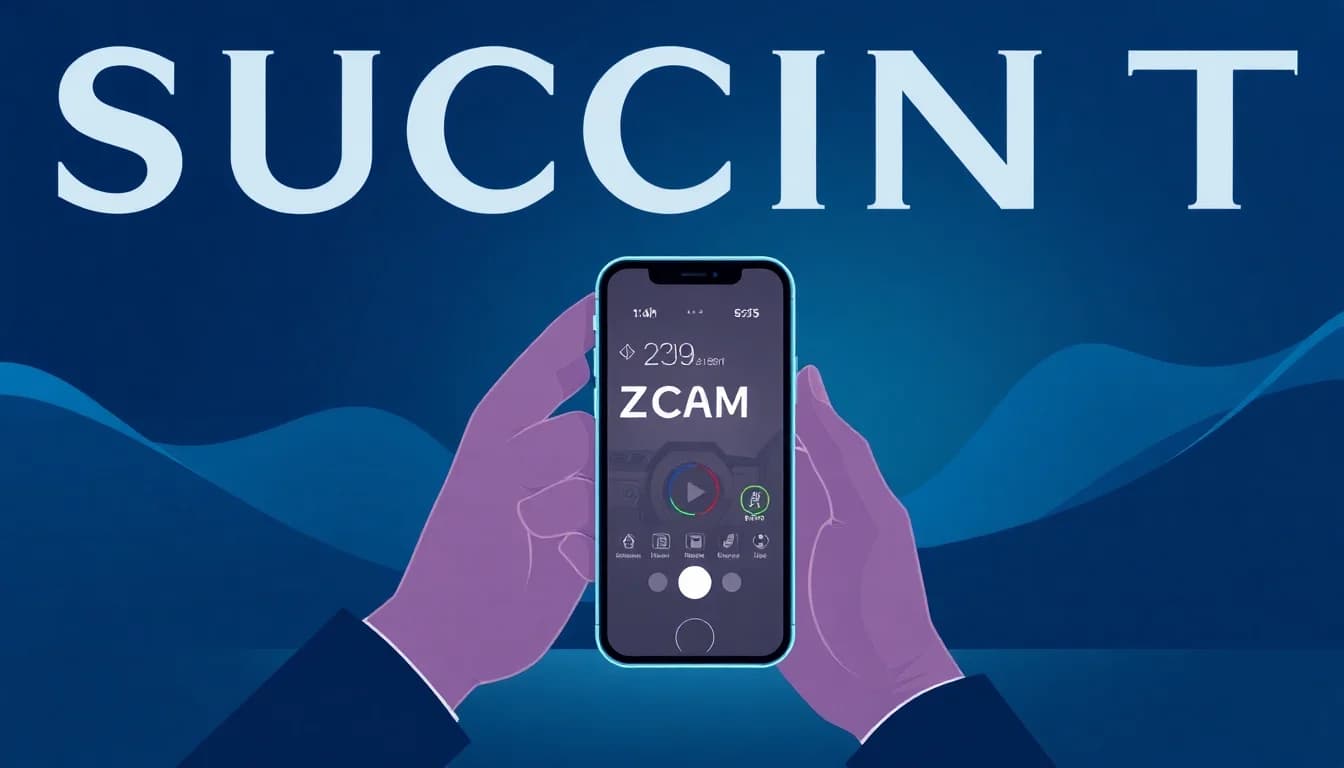
Backed by Paradigm, startup Succinct Labs has introduced ZCAM — an iPhone app for cryptographic verification of photos and videos.
Today, we're launching ZCAM, an iPhone camera app to Prove What’s Real.
— Succinct (@SuccinctLabs) April 23, 2026
ZCAM cryptographically signs photos and videos at the moment of capture. Anyone can independently verify the content came from a real device and hasn't been altered or AI-generated. pic.twitter.com/nHAYqVK1mW
ZCAM signs media files at the moment of capture, creating a tamper-proof record that links the content to the device it was taken with.
Users can independently verify that an image or video was captured by a real device, rather than being generated or altered by AI tools.
Technology
The app is built on a cryptographic fingerprint. When a user takes a photo or video on their iPhone, ZCAM generates a hash based on the captured pixels. Succinct's developers claim this method is more reliable than commercial detectors, which can fail.
Source: Succinct.The project conducted research showing that detectors perform well with unmodified images. However, simple edits like blurring and compression reduced their effectiveness by up to 96%.
Source: Succinct.Context
Succinct launched this tool amid rising risks associated with generative artificial intelligence.
The team cited forecasts from Deloitte, which predict that losses from AI-related fraud in the U.S. could rise from $12.3 billion in 2023 to $40 billion by 2027.
Source: Deloitte.Succinct Labs is developing infrastructure for zero-knowledge proofs. In 2024, Paradigm led a $55 million funding round for the company, with participation from the founders of Polygon and EigenLayer.
Succinct's SP1 zkVM technology protects over $4 billion in digital assets. In August 2025, the startup launched the mainnet for the Succinct Prover Network and the PROVE token.
The project's blockchain operates as a decentralized marketplace on Ethereum. Applications send requests for zero-knowledge proof generation, while independent participants compete to fulfill them.
Notably, in January, the App Store and Google Play blocked dozens of AI applications for "nudifying" individuals.