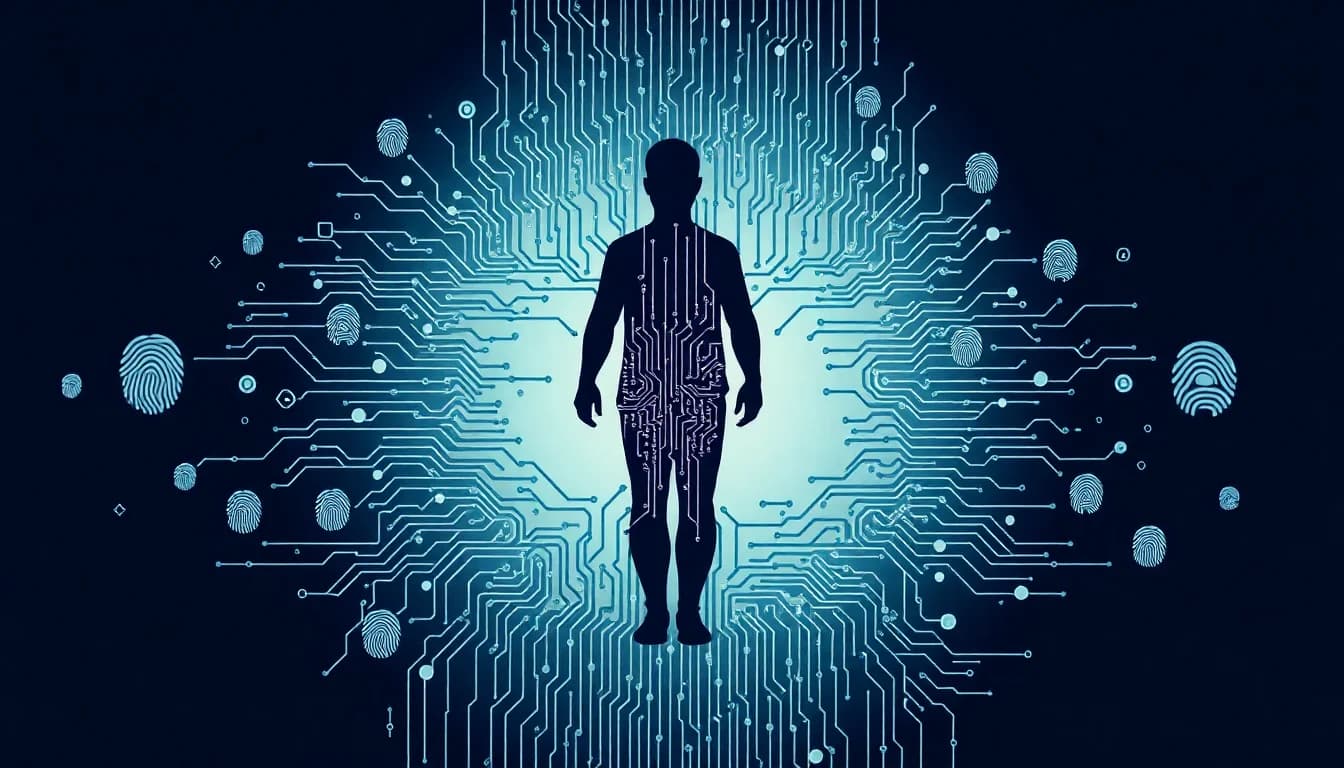
On Biopolitics in the Web3 Era
The rise of artificial intelligence has challenged traditional online verification methods. Text passwords, CAPTCHAs, and facial recognition algorithms no longer guarantee user uniqueness. The digital environment now demands cryptographic proof of humanity. The Web3 industry is evolving towards a new level of identification, transforming the physical body into a universal access tool. The retina, palm vein patterns, heart rate, and genetic code are becoming the primary keys to the new economy.
ForkLog explores how the philosophical concept of biopolitics is being implemented in blockchain networks, why metaverses need users' biological data, and the risks associated with trading one's genome.
“Bare Life” in Web3
The modern concept of biopolitics was articulated in the mid-1970s by Michel Foucault. The French philosopher demonstrated that as the modern state emerged, power began to focus on managing the population and economy through medicine, hygiene, and demographics. The human body became an object of political regulation through disciplinary institutions (schools, hospitals, prisons), statistics, and mechanisms for controlling quality and lifespan.
Foucault's observations were later radicalized by Italian political philosopher Giorgio Agamben. In his book “Homo Sacer: Sovereign Power and Bare Life” (1995), he introduced the term “bare life” (nuda vita). According to Agamben, this is a state in which an individual is stripped of political subjectivity and viewed solely as a biological organism.
Web3 can be seen as a foundation for creating a new economic infrastructure, where the state's and capital's monopoly on identity management gives way to decentralized protocols. Here, blockchain networks form their own biopolitics: the physical body ceases to be merely a vessel for the mind, transforming into a data generator.
Current technologies are transforming “bare life” into “digitized life.” A unique sequence of nucleotides in DNA or the distinctive pattern of an iris becomes the basis of social capital. In the future, protocols may require users to confirm their biological reality in exchange for access to financial services, governance mechanisms, and capital distribution.
The Evolution of Biometric Networks: From Iris to DNA
The crypto industry's mass introduction to biometrics began with projects like World (formerly known as Worldcoin). Its developers created the Orb device specifically for scanning the iris: by providing their biometric imprint, network participants receive WLD tokens and a digital passport, World ID. The project's launch sparked a heated public debate about the ethics of exchanging unique biological markers for financial assets. Nevertheless, the concept of universal basic income (UBI), funded through the protocol's tokenomics, predictably attracted millions of users.
World's dominance in the Proof-of-Personhood market was short-lived. The launch of new protocols changed the approach to data collection. Hardware limitations gave way to mobile technologies.
The Humanity Protocol project launched a network based on Polygon, utilizing palm biometrics (including vein scanning) via smartphones or specialized equipment. This technology does not require the specialized hardware of the Orb, significantly accelerating network scalability.
The TON ecosystem integrated solutions from the HumanCode project. Telegram messenger users can confirm their identity by scanning their palms directly from mini-apps. Developers are betting on cryptographic protection of biometric vectors within smartphones using Secure Enclave standards (available to iOS users).
The sector's development is aimed at increasing the depth of collected data. Startups are laying the groundwork for transitioning to DNA collection. Projects at the intersection of blockchain and decentralized science (DeSci) are emerging. Platforms like GenomesDAO offer genome sequencing and encryption of results. Genome owners can sell temporary access to their genetic markers to pharmaceutical companies without revealing direct links to their identity.
All these trends converge into a unified economic model of total biometric coverage. It is likely that to receive enhanced payouts in the UBI systems of future metaverses, users will need to provide a comprehensive biological profile. While basic payouts may still be achievable through simple facial scans, intermediate levels will require integration with wearable technology for continuous data transmission about heart rate and sleep phases. The highest level of passive income will only be available to fully verified genetic code donors.
The Problem of the “Flesh Oracle”
Blockchain is an isolated system. Smart contracts cannot independently obtain information from the external world. This task is handled by oracles—gateways that supply data about asset prices or match results. At this stage, the issue of bridging the physical and digital worlds arises—the so-called flesh oracle.
Transmitting raw biological data to corporate servers or public blockchains carries critical risks. A compromised password can be changed, but a stolen iris pattern or decrypted genome is unalterable. It is essential to understand that biometrics can only protect access to a key, but are not the key themselves, as a private key is strictly a cryptographic object. However, the compromise of biological data used for accessing this object leads to the irreversible loss of digital identity.
Zero-knowledge proof (ZKP) technologies and fully homomorphic encryption (FHE) are solutions to the privacy problem. ZKP allows for the confirmation of a specific fact without disclosing accompanying information. However, it is important to clarify that zero-knowledge proof does not address the issue of “body reality” on its own. It only proves the correctness of the computation performed, not the fact of “aliveness.” Recognition of a person remains solely a hardware-level task—sensors and specialized scanners.
The next-generation verification process works in tandem: hardware confirms the presence of a unique living individual, after which the device mathematically proves to the protocol the correctness of data collection. The blockchain receives only a cryptographic certificate (ZK-proof). Raw data from the iris or DNA remains on the user's local device or is destroyed immediately after generating the hash.
The FHE technology takes security to the next level. Homomorphic encryption allows external algorithms and neural networks to analyze genetic sequences or medical indicators while the data remains encrypted. The protocol checks the compatibility of the genome with medical research without knowing the original nucleotide sequence.
Thus, a combination of reliable hardware and cryptography forms a complete “flesh oracle,” which confirms the reality of the body while keeping it forever in the cryptographic shadow.
The Market for Biometric Derivatives
Tokenization of biological parameters paves the way for new financial instruments. Genetic data already hold significant commercial value for research institutions, biotechnology companies, and insurance funds, but today their circulation primarily occurs outside of Web3. Transferring this data to the blockchain remains a conceptual model. Although a mass market in this area does not yet exist, the development of niche initiatives at the intersection of blockchain and genomics could eventually create an initial digital market for genetic capital.
Within this futuristic concept, users may gain the ability to directly monetize their physical characteristics. Theoretically, an owner of a rare genetic mutation (for example, congenital immunity to certain viruses) could grant access to their data to research laboratories. Proponents of Web3 believe that blockchain can automate regular payments through smart contracts; however, implementing such an idea faces significant hurdles. Legally and methodologically linking a specific medical discovery to an individual genome is extremely challenging, which is why pharmaceutical companies currently do not use royalty mechanisms for each access to data, instead opting for one-time compensation or payment for participation in clinical trials.
Nevertheless, the hypothetical development of a secondary market could lead to the creation of biometric derivatives. Research pools could issue tokens whose returns would be backed by future medical discoveries based on the collected genetic material of a specific user group. In the long run, this could lead to the formation of futures contracts for access to the DNA of certain demographic groups.
There is a possibility that in the future, the economy of metaverses will partially rely on verified biological diversity. According to one possible development scenario, liquidity will begin to flow from traditional assets into data about human physiology, and biometric staking will become a new form of passive income. In such a paradigm, freezing ZK-certificates of one's DNA in a smart contract could potentially yield income generated by requests from research corporations.
The Ethical Crisis of Genome Tokenization
The trade in biometric data undermines traditional notions of privacy. The monetization of DNA raises the most significant ethical concerns.
Genetic information is not strictly individual. DNA contains precise data about biological parents, siblings, and children. Placing one's genome on a decentralized marketplace automatically compromises the medical confidentiality of the entire family. A single decision by a user to sell their genetic profile for UBI opens access to information about genetic disease predispositions for dozens of their relatives.
The collective nature of DNA directly conflicts with the individualism of the crypto economy. Smart contracts lack mechanisms for obtaining consent from all carriers of similar genetic markers.
There is a risk of creating genetic inequality. Algorithms in metaverses and decentralized insurance protocols could discriminate against users based on encrypted on-chain data. Approval for a loan in a DeFi protocol or determining medical insurance rates would depend on the likelihood of disease development encoded in the tokenized genome.
Exchanging biometrics for basic income creates economic coercion. Users voluntarily hand over the keys to their physical existence to protocols not only due to financial scarcity but also succumbing to the temptation of quick monetization, social trends, or simple misunderstanding of long-term risks. The technology, designed to protect against corporate dictatorship, creates a new dependency: the right to participate in the digital economy is purchased at the cost of complete de-anonymization of the body.
The integration of biopolitics into the architecture of Web3 will complete the merger of the physical and digital worlds. The body ceases to be an external object in relation to the network. Blockchain transforms physiology into liquidity, and human life into a set of cryptographic proofs. Using DNA as a biometric identifier could complicate the execution of Sybil attacks, but does not fully resolve this issue, as critical vulnerabilities remain in the form of compromised patterns and data cloning. The main oversight lies elsewhere: this approach poses a severe threat to the fundamental human right not to be indexed by an algorithm.