ForkLog is not responsible for the investment decisions of its readers.
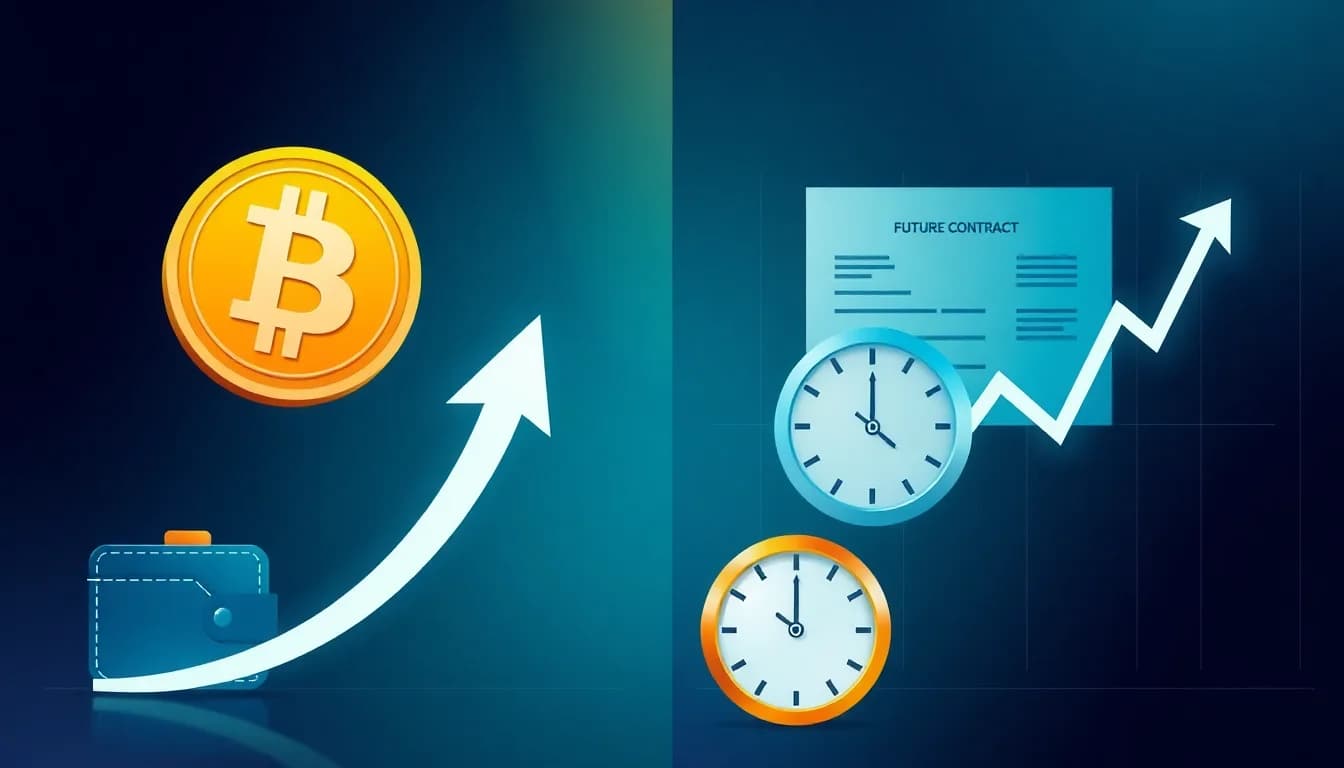
Newcomers to cryptocurrencies typically start by learning about two primary trading methods: spot and futures trading. Both are widely used but differ in mechanics, risk levels, and experience requirements.
In this article, the team at the cryptocurrency exchange CoinEx explains how each trading type works and which is suitable for beginners.
What is Spot Trading?
Spot trading involves exchanging cryptocurrency at the current market price with immediate asset transfer. When buying Bitcoin on the spot market, the trader receives actual coins. When selling, they exchange them for another currency, most commonly USDT.
On CoinEx, the spot trading section allows for direct cryptocurrency exchanges. Orders are executed based on price and time priority. The platform supports several order types: limit, market, stop-limit, and stop-market, each offering varying degrees of control over entry and exit prices.
To reduce costs, CoinEx allows users to pay fees with CET, the exchange's native token, offering a 20% discount, which is significant for active traders.
What is Futures Trading?
Futures trading fundamentally differs from spot trading. Traders do not buy the asset but trade a contract that tracks its price.
On CoinEx, futures are available as perpetual contracts—without a fixed expiration date. The platform supports leverage from 1x to 100x. This means that with $100 in the account, a trader can open a position worth $10,000 at 100x leverage. However, losses also increase proportionally.
To keep the contract price aligned with the spot price, the exchange uses a funding rate, recalculated every eight hours.
The main advantage of futures is the ability to trade in both directions. A long position profits when prices rise, while a short position profits when prices fall. This makes the tool useful in both bull and bear markets.
CoinEx provides take-profit and stop-loss features for futures positions, allowing traders to set a price at which their position will automatically close. For beginners trying out futures, this tool is not just helpful—it’s essential.
A complete list of trading pairs and the interface can be found in the futures trading section of CoinEx.
Key Differences
ParameterSpotFuturesWhat the trader receivesReal assetContract tracking asset price
LeverageNo (1:1)
From 1x to 100x on CoinEx
Maximum lossLimited to the amount invested
Can exceed initial margin
Trade directionOnly long
Long and short
SettlementInstant
Funding rate every ~8 hours
DifficultyLow
High
Who it suitsBeginners, long-term investors
Experienced traders for hedging
Pros and Cons for Beginners
Spot — Simplicity and Transparency
Spot trading excels due to its straightforward mechanics. The maximum loss is limited to the amount invested—there’s no leverage, margin calls, or liquidations. Profit calculation is intuitive: if Bitcoin rises by 10%, the spot position increases by 10%.
Traders do not need to consider funding rates, monitor expiration dates, or fear forced position closures. The main limitation is that profits can only be made on price increases; there’s no mechanism for shorting.
Futures — A Powerful Tool with a High Entry Barrier
Futures offer what spot trading lacks: shorting, leverage, and the ability to hedge a portfolio. In a pronounced trend—whether rising or falling—a futures position can yield proportionally more than a spot position.
However, the risks are higher. With 10x leverage, a 10% price drop wipes out the margin. At 100x, just a 1% movement can lead to complete liquidation. The funding rate incurs additional costs for holding positions long-term. Futures require discipline, an understanding of position sizing, and constant risk management—skills that develop over time.
How to Get Started
For most beginners, spot trading is the best entry point. It teaches how to read charts, work with orders, and manage positions without additional factors like leverage, liquidations, and funding rates.
Transitioning to futures makes sense when a trader consistently trades on the spot and understands concepts like margin, liquidation price, and funding mechanics. Starting with futures before mastering spot trading is one of the most common and costly mistakes for newcomers.
The optimal path looks like this:
- Start with spot. Learn about order types, how to read charts, and trade without leverage. The spot trading section of CoinEx is ideal for this.
- Study futures mechanics. Understand leverage, margin, liquidation, and funding rates before investing real money.
- Move to futures with minimal leverage. Open initial positions on the CoinEx futures platform with 1–3x leverage.
- Use stop-loss from day one. An unprotected futures position is a direct path to losses. The take-profit and stop-loss features on CoinEx are designed for this.
Spot and futures are tools with different purposes. There is no single "best" option; the choice depends on experience and goals.
For accumulating cryptocurrency and long-term portfolio growth, spot trading is simpler, safer, and more understandable. For hedging positions and profiting from price movements in both directions, futures become relevant—but only after the trader has mastered the basics.