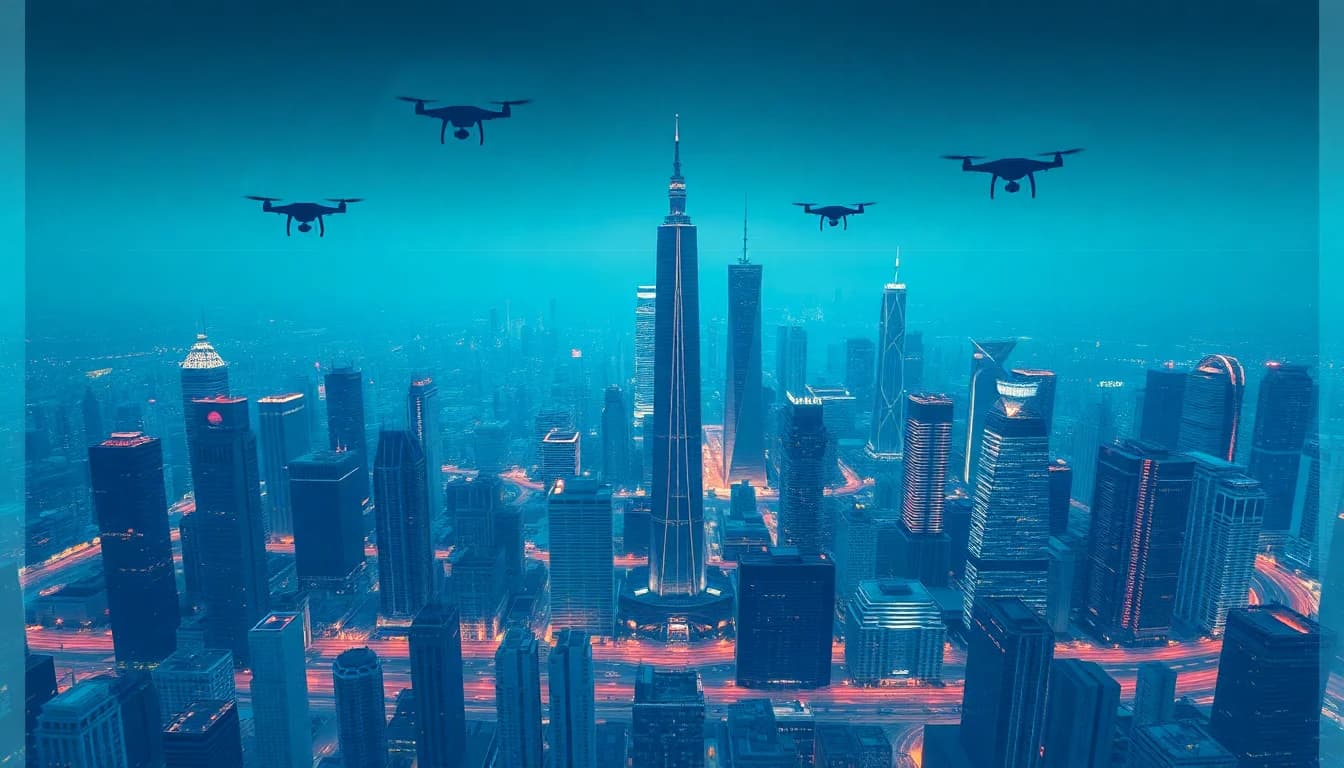
Starting February 1, Shanghai will allow consumer drones to operate in designated free-fly zones covering 46% of the city, according to SCMP.
The municipal government aims to boost the development of the city’s low-altitude economy. Drones can be launched without prior notification in specific "suitable airspaces" provided they are registered.
Local authorities confirmed that three parks, including the Shanghai Botanical Garden, are included in the approved zones.
In certain areas with flight restrictions, drone launches will require approval from local aviation authorities.
Operators can apply online via the Suishenban service. The free-fly and restricted zones are displayed on a map within the app, which serves as a unified online platform for drone registration, flight requests, and location bookings.
This initiative highlights the growth of the local drone market and related activities. By the end of 2025, Shanghai is expected to have 220,000 registered drones and nearly 800 companies involved in their operation, with 3.2 million flights recorded that same year.
The low-altitude economy is a new type of economic activity utilizing airspace up to 1,000 meters. This includes drones, electric vertical takeoff and landing vehicles like flying taxis, and other aircraft for various purposes: logistics, tourism, agriculture, emergency services, and urban air mobility.
In early January 2026, Shanghai announced plans to transform the city into a global leader in the low-altitude economy. Authorities aim to build an $11.5 billion industry by 2028 and create a national cluster of advanced manufacturing.
Notably, in July 2025, flying taxi manufacturer Joby Aviation delivered its first aircraft to the UAE and completed pilot testing. The launch of services in the region is expected in 2026.