Overview
- Judge Katherine Polk Failla has rescheduled Roman Storm's retrial for April 26, 2027, according to a ruling made on Tuesday.
- The motion for acquittal, submitted on April 9, is still under consideration.
- Storm faced a conviction in August 2025 for conspiring to run an unlicensed money transmitting operation, while the jury was deadlocked on charges related to money laundering and sanctions violations.
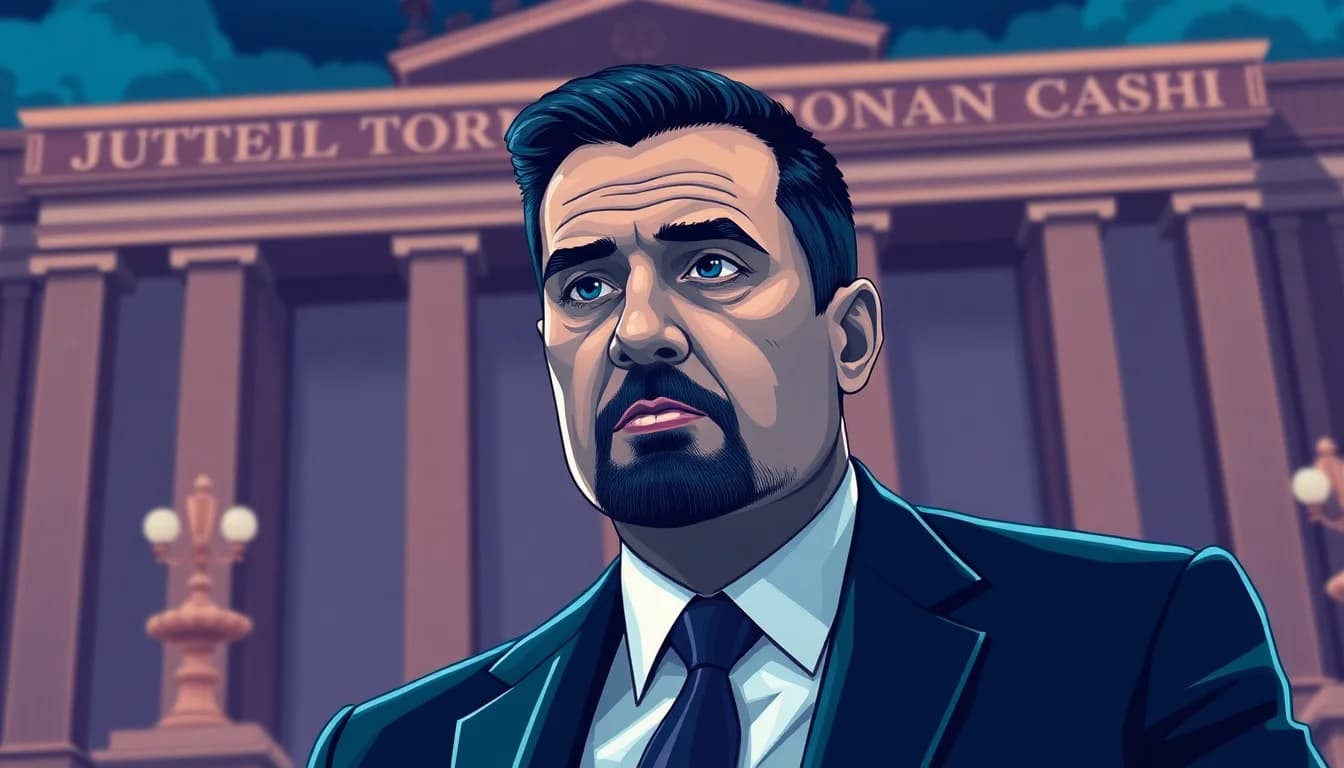
Roman Storm, a developer associated with Tornado Cash, will have to wait until spring 2027 for his retrial on two counts where the jury was unable to reach a verdict. This postponement was issued by Judge Katherine Polk Failla, extending the timeline by over six months.
The court order, filed in the Southern District of New York, sets a new date for the retrial at the Thurgood Marshall Courthouse on April 26, 2027. The schedule for pretrial activities will now include expert disclosures due by February 5, 2027, and a final conference on April 20. Judge Failla has excluded the time leading up to the retrial under the Speedy Trial Act.
She referenced Storm's pending acquittal motion and his request to move the retrial to late April 2027, noting that this later date was suggested by the defense team.
Federal prosecutors, led by U.S. Attorney Jay Clayton, had previously sought to commence the retrial on October 5 or 12 of this year. Storm's legal counsel argued that this was premature due to the ongoing consideration of the acquittal motion.
A jury in Manhattan found Storm guilty in August 2025 for conspiracy to operate an unlicensed money transmitting business, while they could not agree on the charges of conspiracy to commit money laundering and conspiracy to violate U.S. sanctions. The government intends to retry the two counts, which could result in a maximum combined sentence of 40 years.
“Aiming to Set an Example”
Storm responded to the court's decision with a tweet, asserting that the case is intended to send a message to the broader industry. "The jury was deadlocked on the two most serious charges against me. And yet, SDNY continues to pursue this," he remarked. "It's about setting an example."
Before I begin: all information in this post is public and available from my case files. Nothing is new, and I'm not disclosing anything you can't already find in the court documents.
The retrial has been postponed to April 26, 2027. The decision was made today (Dkt.…
— Roman Storm 🇺🇸 🌪️ (@rstormsf) August 25, 2026
He referenced a February 2024 event by the New York City Bar Association, where Tara La Morte, head of SDNY's Illicit Finance and Money Laundering Unit, indicated that her office wanted the industry to take heed, highlighting the Tornado Cash prosecution as an example of enforcing compliance.
In his tweet, Storm also pointed out that Chainalysis, a blockchain analysis firm, "was operating its own Tornado Cash relayer, profiting from the transactions that passed through it," suggesting that this was evident in trial transcripts. He noted that after his attorneys subpoenaed Chainalysis to testify, "the jury never heard any of that" because the firm's witness invoked the Fifth Amendment.
Decrypt has reached out to Chainalysis for a statement.
Legal Implications for Developers
Storm's case has attracted attention from privacy advocates, including the Electronic Frontier Foundation and Vitalik Buterin, co-founder of Ethereum. Buterin, who expressed support for Storm in January, described himself as "an active user of privacy tools, including those created by Roman."
This is not an isolated case. Alexey Pertsev, another Tornado Cash developer, was convicted of money laundering in the Netherlands in May 2024, receiving a sentence of 64 months. He was released to electronic monitoring in February 2025 while appealing, with the Ethereum Foundation pledging $1.25 million to support his legal defense.
In the United States, co-founders of Samourai Wallet, Keonne Rodriguez and William Lonergan Hill, admitted guilt to charges of running an unlicensed money transmitting business and were sentenced in November 2025 to five and four years in prison, respectively. U.S. President Donald Trump indicated to Decrypt in December that he would consider a pardon for Rodriguez, who began serving his sentence shortly thereafter.
Storm's situation raises questions about the Justice Department's own policies. Shortly after his conviction, Matthew Galeotti, the acting head of the department's criminal division, stated that prosecutors would no longer pursue charges under the statute Storm was convicted under for decentralized and non-custodial software, a policy he noted would apply moving forward.
Storm has yet to be sentenced for the money transmitting count, which carries a maximum penalty of five years.