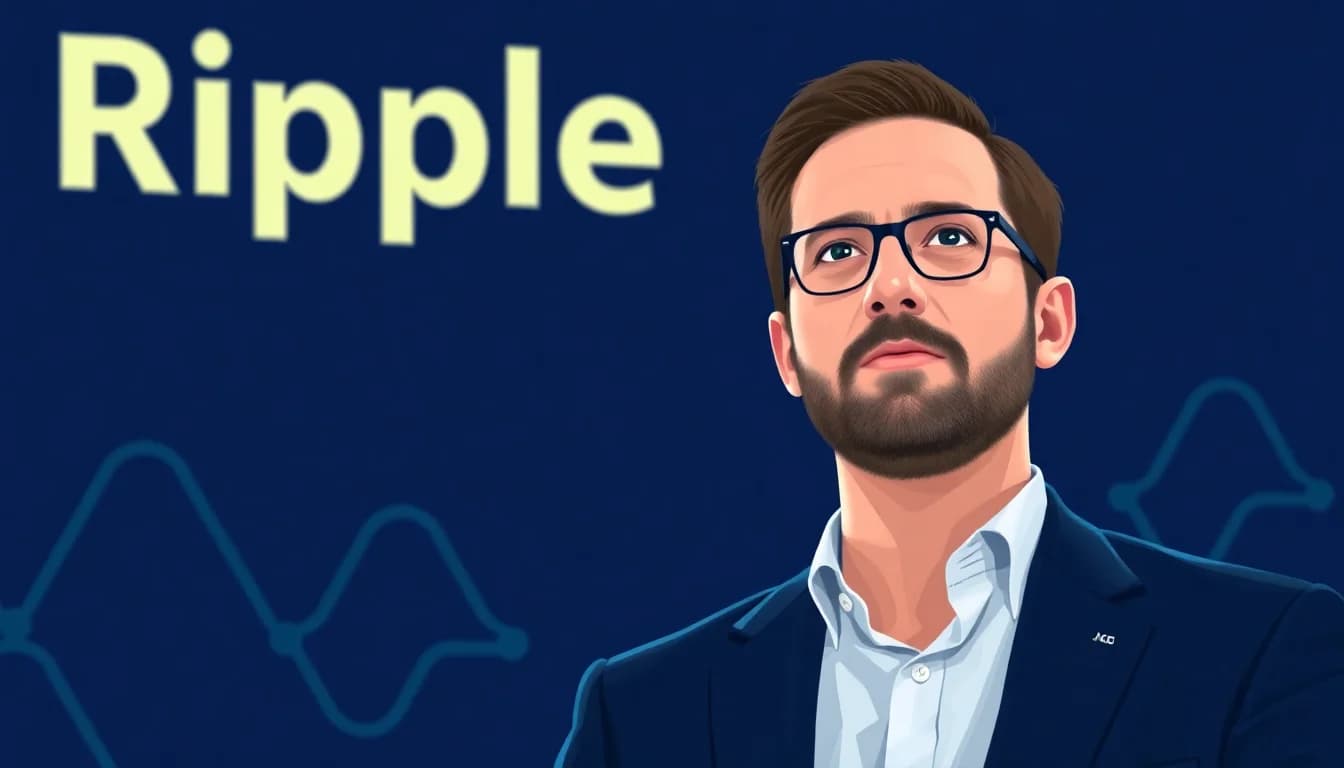
MarketsRipple's CEO Reveals Company Considered Shutdown Amid SEC Lawsuit
Brad Garlinghouse disclosed that he and co-founder Chris Larsen contemplated dissolving Ripple and distributing XRP to shareholders before opting to contest the lawsuit from 2020.
By Shaurya Malwa Jul 12, 2026, 6:09 a.m. 2 min readMake preferred on ShareShare this articleCopy linkX (Twitter)LinkedInFacebookEmailMake preferred on
SummaryShow- Ripple's CEO Brad Garlinghouse revealed that he and co-founder Chris Larsen seriously contemplated shutting down the business and distributing XRP to shareholders following the SEC's 2020 lawsuit.
- Garlinghouse noted that they decided to fight instead of closing, a choice he believes saved numerous jobs but incurred about $150 million in legal fees over four years.
- Ultimately, Ripple succeeded when a federal judge ruled that XRP itself is not classified as a security, and the case was settled last year after a shift in SEC leadership toward a more favorable stance on crypto.
Ripple nearly shut its doors instead of battling the U.S. Securities and Exchange Commission, according to Chief Executive Brad Garlinghouse, who explained the dilemma he and co-founder Chris Larsen faced after the agency's lawsuit in 2020.
During a recent talk at the University of Kansas School of Business this week, Garlinghouse shared that they seriously considered dissolving Ripple and distributing its substantial XRP holdings to shareholders. He characterized this as the simpler route against a government he perceived as having "infinite power and resources."
Garlinghouse mentioned that Ripple possessed a significant amount of XRP, which they could have allocated to shareholders on a pro-rata basis while shutting down the company, thereby effectively resolving the legal situation.
However, they opted to continue their fight, as closing would have resulted in the loss of hundreds of jobs. "In hindsight, I'm glad we chose this path, but it wasn't an obvious decision at the time," he remarked.
The SEC's lawsuit in 2020 accused Ripple of selling XRP as an unregistered security, naming both Garlinghouse and Larsen personally. Garlinghouse recounted meeting SEC officials four times between 2017 and 2019 without legal representation and never receiving a warning that XRP could be classified as a security, which led him to believe the company lacked clear regulatory guidance.
He estimated Ripple's legal expenses at around $150 million throughout the four-year legal battle.
Ripple achieved a favorable outcome when Judge Analisa Torres ruled that XRP is not a security by itself. The case was settled in May last year following a change in SEC leadership which adopted a more lenient approach towards cryptocurrencies.
Latest Crypto News- 1Bitcoin, ether little changed as U.S. launches fresh Iran strikes44 minutes ago
- 2Bitcoin’s BIP 110 fork deadline nears with miner support at zero1 hour ago
- 3Lending protocol Bonzo loses 77% of value locked as $9 million oracle exploit rattles Hedera12 hours ago
- 4Crypto IPO market stalls as capital rotates to AI and macro uncertainty weighs13 hours ago
- 5The UK has finally shown it’s serious about crypto 16 hours ago
- 6Bitcoin treasury company Empery Digital sold about half of its BTC stack18 hours ago
- 7AI found an Ethereum bug that could take validators offline, but humans had to prove it19 hours ago
- 8Bitcoin analysts predict $300,000–$500,000 price in 2029. The math says noJul 11, 2026
- 9Meta's Chief Data Officer Says Agentic Commerce is the "Next Tier of Business"Jul 10, 2026
- 10U.S. government digital dollar set to be banned tonight under housing law's CBDC limitJul 10, 2026
Digital Assets: Quarterly Review and Outlook Q2
Digital Assets: Quarterly Review and Outlook Q2
Digital assets faced a third consecutive quarter of losses in Q2 2026, marking the longest decline since the 2022 bear market, as institutional investments shifted towards AI stocks and Bitcoin ETFs experienced their largest quarterly outflow since inception. This report delves into the factors behind this trend, where structural adoption persisted, and what indicators to monitor in Q3.
By CoinDesk ResearchJul 10, 2026Digital assets faced a third consecutive quarter of losses in Q2 2026, marking the longest decline since the 2022 bear market, as institutional investments shifted towards AI stocks and Bitcoin ETFs experienced their largest quarterly outflow since inception. This report delves into the factors behind this trend, where structural adoption persisted, and what indicators to monitor in Q3.
Why it matters:
Digital assets faced a third consecutive quarter of losses in Q2 2026, marking the longest decline since the 2022 bear market, as institutional investments shifted towards AI stocks and Bitcoin ETFs experienced their largest quarterly outflow since inception. This report delves into the factors behind this trend, where structural adoption persisted, and what indicators to monitor in Q3.
View Full ReportMore From Markets