Summary
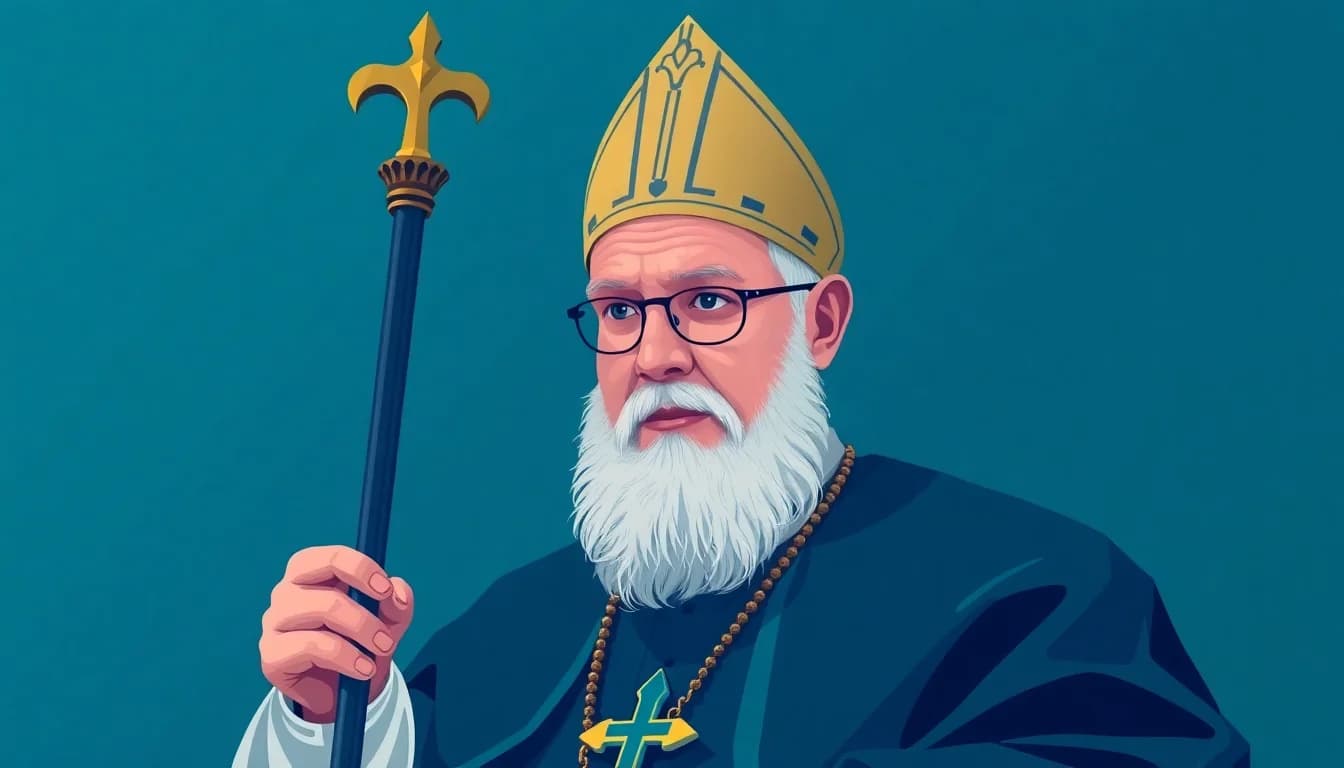
- Pope Leo XIV expressed on October 2 via X that there is an "ontological difference" between human-created art and machine-generated images.
- The Pope emphasized the Church's desire to forge a new alliance with artists and cultural entities to "preserve our humanity."
- This statement follows his May encyclical on AI and a speech delivered in Paris on September 25, where he referenced the encyclical.
Pope Leo XIV stated on Friday that there exists an "ontological difference" between art created by humans and that produced by machines, asserting that the Church aims to reconnect with artists and cultural institutions to "preserve our humanity."
The message was shared on X, where he has previously voiced concerns regarding AI.
Myriad: Predict the outcome of the midterm elections.The Pope articulated, "There is an ontological difference, even before an aesthetic one, between art and what a machine can generate through statistical calculation based on millions of images created by others. Algorithms lack the spark of humanity."
In philosophical terms, "ontological" refers to the fundamental essence of something, rather than its appearance. The Pope's argument is that while a painting by a human and an AI-generated image may appear similar, they are fundamentally different. This distinction exists prior to any discussion of style.
His argument is straightforward: a machine operates through "statistical calculation" based on a vast array of images created by others.
Simply put, AI image generators are trained on extensive datasets of existing visuals, discerning patterns and predicting how a new image should appear. There is neither a human touch nor personal experience represented in the outcome.
While he did not specifically use the term, the Pope's remarks touch on the issue of "AI slop"—the low-quality content generated en masse by AI, which Merriam-Webster identified as its 2025 word of the year. He argues that the concern is not solely about quality but also about the nature of the creations themselves.
A Pope with a History of Addressing AI Concerns
This is not an isolated incident. In May, Pope Leo published his first encyclical—an official letter to the entire Church—entitled Magnifica Humanitas, focusing on the protection of individuals in the era of AI. He asserted that technology is never neutral and that data should be regarded as a common good.
Additionally, the Vatican established an AI commission in May, encompassing seven Vatican departments, aimed at coordinating the Holy See's approach to AI, including internal policies regarding its application.
On September 25, during a meeting with French officials at the Élysée Palace in Paris, the Pope stated that addressing AI was essential for his first encyclical. He also cautioned that science and technology, devoid of moral guidance, could lead individuals away from virtuous paths.
There is an interesting note regarding AI detection. In April, Pangram Labs' AI-detection tool flagged several posts from the Pope's X account as likely AI-generated. The Vatican did not respond to inquiries at that time.
AI detection tools are often unreliable. For instance, in 2024, ZeroGPT incorrectly labeled the U.S. Declaration of Independence as 97.93% AI-generated. Conversely, in July, a company called Proudly Human verified a collection of the Pope's speeches and writings on education and AI as being authored by a human, as stated in their press release.
In recent years, the question of "who created this?" has evolved into a legal and financial matter. In March, the U.S. Supreme Court chose not to hear the case of Thaler v. Perlmutter, thereby upholding an appeals court's decision that copyright requires a human author, in a case concerning art created entirely by AI.
Artists have also begun to express their views through their actions. A platform called Cara, designed to exclude AI-generated images, attracted nearly 900,000 users by June 2024.