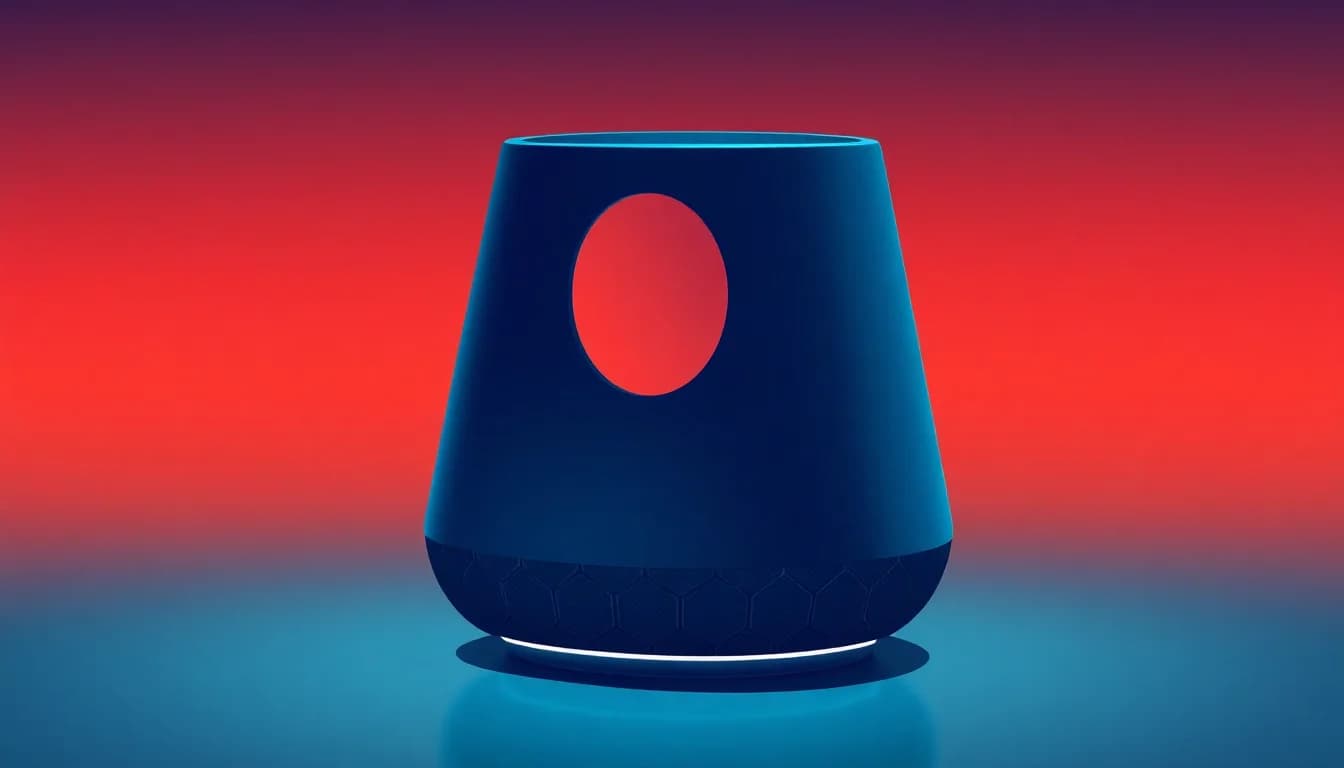
OpenAI is set to enter the consumer electronics market with an "AI companion" in the form of a smart speaker, according to sources cited by Bloomberg.
A key feature of the product will be its "personality" and ability to connect with users on a human-like level, as reported by the publication's sources.
The device will include a camera and other sensors to help it understand its surroundings and context, as well as mechanical elements that can move autonomously. OpenAI plans to integrate a battery into the new product, allowing it to be moved from room to room throughout the day.
The system will also have access to the owner's messages and emails, enabling it to better understand user habits.
The assistant will operate on an advanced version of the voice mode GPT-Live, which OpenAI released in early July. The device will be capable of managing smart home functions, playing media, and responding to messages via ChatGPT. The company envisions the speaker as a companion for users and a physical embodiment of a chatbot.
The design is overseen by former Apple design chief Jony Ive, along with other ex-employees who worked on the iPhone and Mac.
OpenAI plans to unveil the device by the end of 2026 and begin sales in 2027. However, a lawsuit from Apple could delay these timelines; the company filed the suit on July 10, accusing the AI startup of stealing trade secrets. One of the defendants is Tan Tan, OpenAI's Chief Hardware Officer and former head of iPhone product design.
The speaker is one of five gadgets currently in development at OpenAI. In July, the company released the Codex Micro mini-keyboard for controlling AI agents. It features a confirmation button, a microphone, a model reasoning level dial, and a joystick for selecting skills. Users can choose from low-profile switches in both clicking and silent versions, along with a set of 32 interchangeable keys.
Codex Micro mini-keyboard from OpenAI. Source: OpenAI.As a reminder, in June, OpenAI filed a confidential IPO application, which could value the company at $1 trillion.