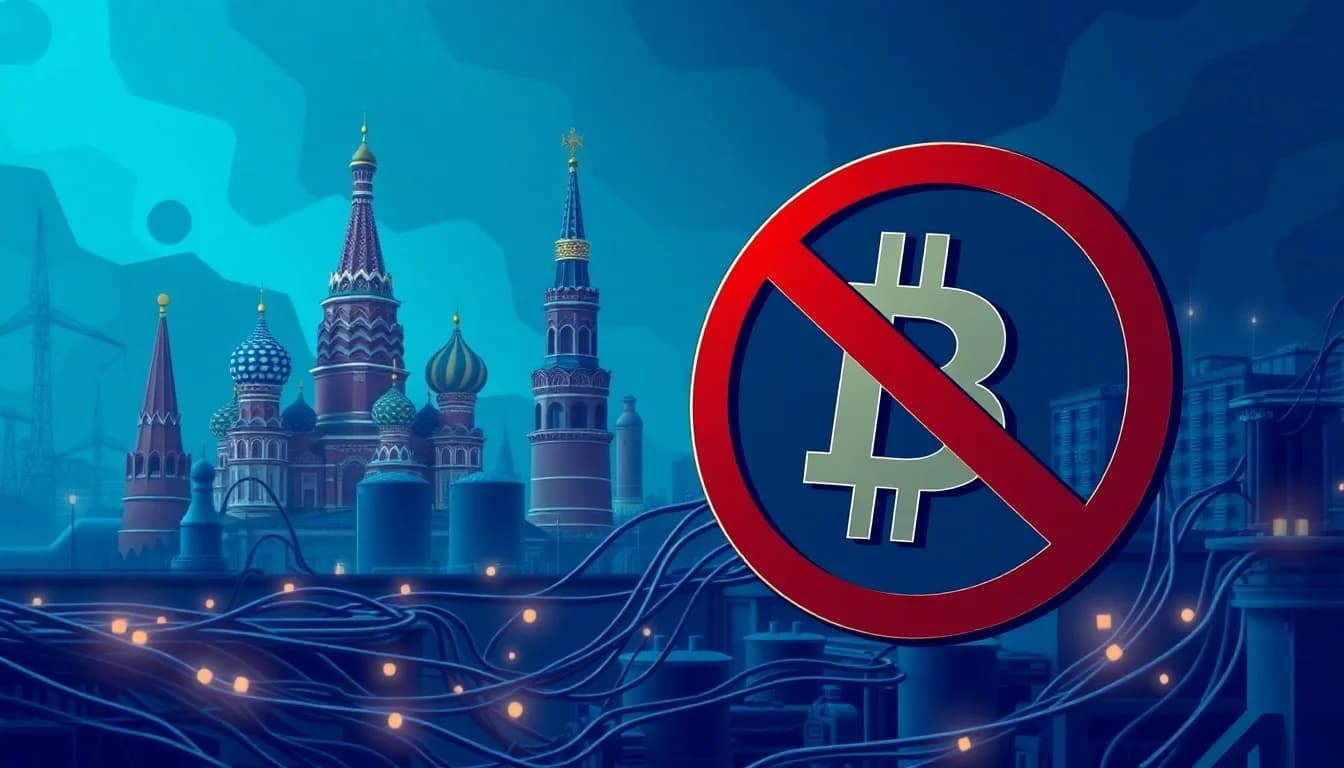
The Energy Ministry of Russia has announced a permanent ban on cryptocurrency mining activities in Moscow and certain areas of Kursk, effective until December 31, 2032, as part of government decree No. 936. This measure aims to stabilize the regional power grid, which has been under pressure from energy-intensive mining operations.
These restrictions were enacted due to ongoing power capacity shortages exacerbated by the increasing demand from mining facilities. The decree, signed on July 25 and made public on July 31, also prohibits participation in cryptocurrency mining pools.
According to Luxor’s Hashrate Index, Russia contributed approximately 175 exahashes per second to Bitcoin's global computing power in the first quarter, accounting for 16.4% of the total. This places Russia second only to the United States, although the specifics of mining capacity in the newly restricted areas remain uncertain.
The Energy Ministry indicated that the year-round restrictions were necessary to prevent further strain on the power grid, as mining operations currently consume about 1 gigawatt of power in the Moscow area. Projections suggest that data center capacity could reach 3.6 gigawatts, representing 17% of peak demand, by 2032, as reported by Interfax.
Moreover, the mining sector has been affected by Western sanctions. Russian firms have reportedly been utilizing domestically mined Bitcoin for international transactions, a move supported by legal adjustments aimed at mitigating the impact of these restrictions, according to Finance Minister Anton Siluanov.
In recent legislative actions, the Russian parliament upheld a ban on domestic cryptocurrency payments while allowing exceptions for foreign trade and transactions involving mined Bitcoin, thereby maintaining this payment method as traditional channels come under pressure from sanctions.
The U.S. Treasury previously sanctioned BitRiver and ten of its subsidiaries in 2022, citing that Russian mining operations were aiding the country in monetizing its energy resources and potentially diminishing the effectiveness of sanctions.
Following the legalization of registered crypto mining in 2024, Russia has seen a series of bans in various regions, including a six-year prohibition in ten areas due to electricity consumption concerns. Additional year-round restrictions have since been expanded to include southern Irkutsk and most of Buryatia and Zabaykalsky Krai.