Summary
- Microsoft President Brad Smith authored a 3,000-word essay addressing the backlash against AI from graduates, framing it as a significant alert for the tech industry.
- His essay emphasizes the need for adaptation, yet does not propose specific policy changes.
- Mustafa Suleyman, Microsoft's AI CEO, indicated in February that most white-collar jobs could soon be automated.
Brad Smith, the president and vice chair of Microsoft, has a message for the graduating class of 2026: he is aware of their concerns.
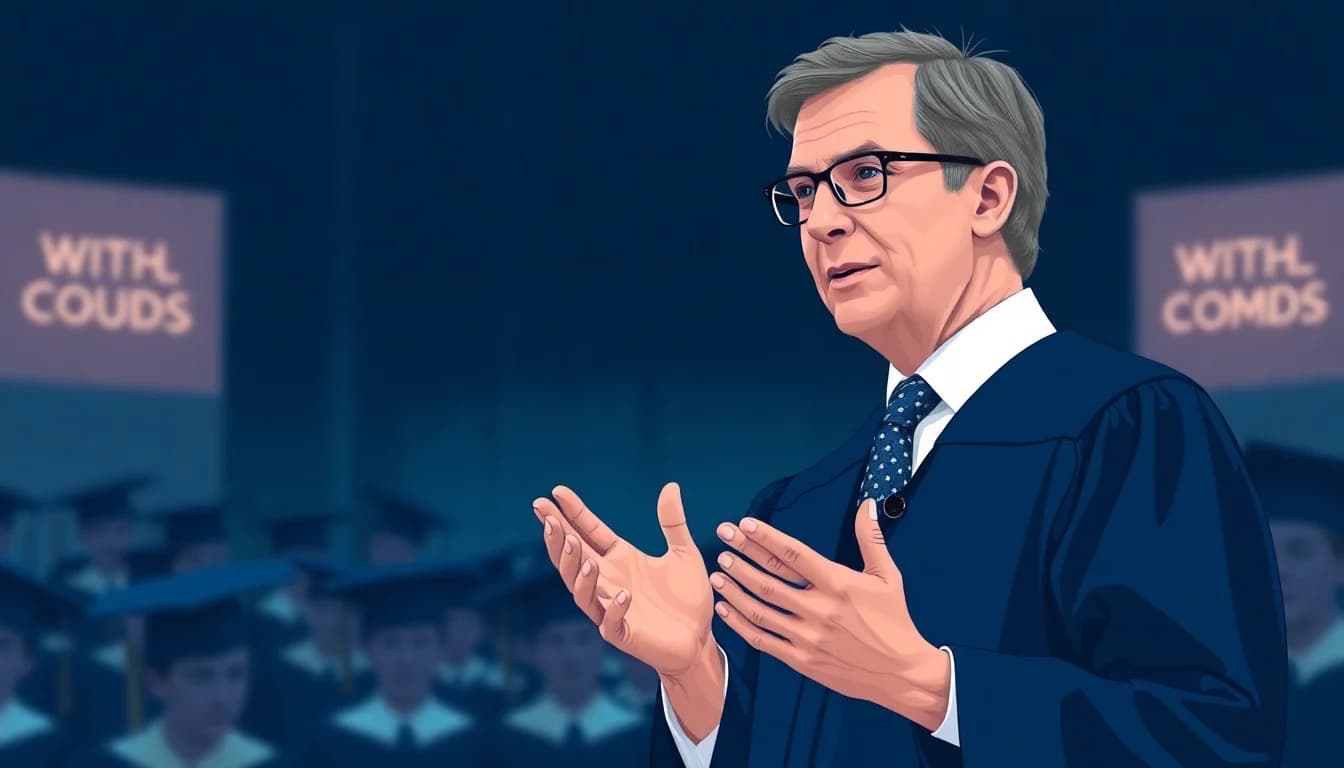
This spring, students at universities across the U.S. interrupted commencement speakers whenever AI was mentioned. For instance, former Google CEO Eric Schmidt faced boos at the University of Arizona, and a real estate executive encountered similar reactions at the University of Central Florida. The consistent pushback prompted Smith to reflect and write about the situation after returning from a reunion at Princeton.
The outcome is a lengthy blog post that begins by reflecting on historical perspectives from 1838 and culminates in a call for students to adapt to AI and seek technology that provides them with a sense of purpose.
"The reactions from this year’s graduates serve as a significant wake-up call for the tech industry," Smith stated. "I hope leaders in our field will heed this response and learn from it."
Smith draws a parallel between AI and the invention of the camera, recalling how French painter Paul Delaroche famously declared that painting was dead upon seeing a photograph, even though photography later influenced various art movements. His argument is that technology disrupts existing norms, but humans find ways to adapt and innovate.
However, he does not shy away from acknowledging the challenges in the job market. Graduates are facing "AI automation of tasks in current entry-level positions" and "corporate pressures to reduce workforce sizes to manage AI's substantial costs," according to him.
As a key figure in a company leading this technological shift, Smith describes these changes as creating a "perfect storm."
Adding context to this, Mustafa Suleyman, Microsoft's AI chief, predicted in February that most white-collar roles—including those of lawyers, accountants, and marketers—could be fully automated in the next two years. Coinciding with the release of Smith's essay, CFO Amy Hood informed investors of a year-over-year decline in headcount during Microsoft’s fiscal third quarter, suggesting that this trend would persist.
Microsoft plans to allocate around $80 billion toward AI infrastructure by 2026. A recent Federal Reserve study revealed that U.S. programming job growth plummeted by nearly 50% following the launch of ChatGPT in November 2022, leading researchers to estimate that about 500,000 developer positions that would have otherwise existed simply did not come to fruition.
Despite these challenges, Smith asserts that the American dream has always encompassed more than just job security and economic advancement, emphasizing the importance of having a purpose.
He remarked, “For those in the tech industry who appear to envision a future where machines take over jobs and AI surpasses human capabilities, the next generation has responded compellingly: ‘not so fast.’”
Nonetheless, he defends the necessity of embracing AI, arguing that young people should have a say in determining AI's role rather than the reverse.
He advocates for innovative approaches to enhance progress without triggering a potential global financial crisis due to job shortages and widening inequality. "The technological, economic, and societal shifts over the last thirty years have left many individuals behind. We must explore different strategies, centered on shared responsibilities, if we are to improve as we advance," he stated, without specifying which strategies should be adopted.
Smith advises workers to reconsider their perception of jobs, suggesting they view them as a "bundle of tasks" rather than simply titles. This idea is inspired by a LinkedIn leadership book titled “Open to Work,” which encourages individuals to categorize their tasks into what AI can handle, what they can accomplish with AI, and what only humans can do.
Furthermore, Smith identifies five essential human skills that AI cannot replicate: curiosity, creativity, compassion, communication, and courage. He also encourages younger generations to maintain a positive outlook, stating, "You are uniquely positioned to make a positive difference," and urging them to advocate for "agency, ambition, dignity."