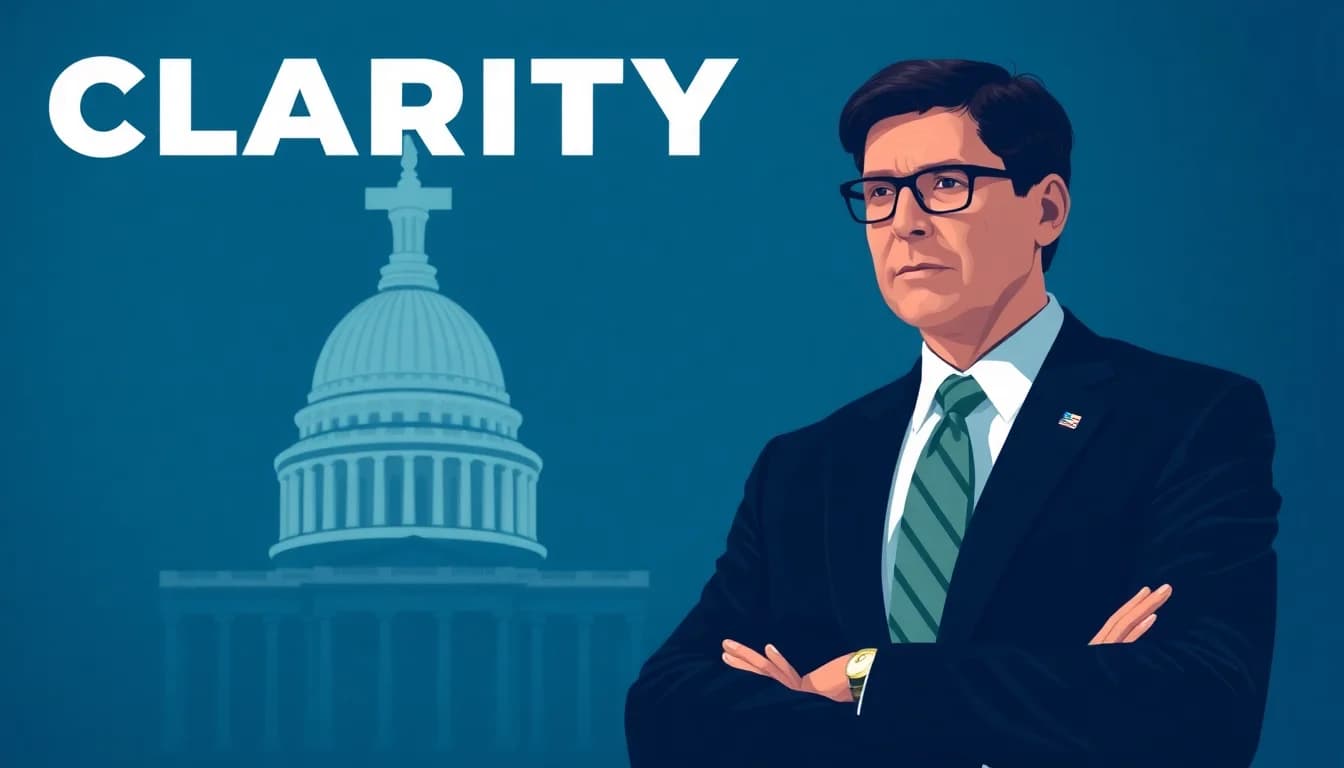
Mark Esper, the former U.S. Secretary of Defense, urged the Senate to promptly pass the Clarity Act in an opinion piece for Financial Times, emphasizing that the legislation concerning the structure of the digital asset market is a matter of national security.
Esper connected this call to the way the U.S. has maintained global influence over the past 80 years, leveraging not only military power but also the dollar and payment infrastructure that provide Washington with tools for sanctions and oversight.
He warned that new financial infrastructures built on blockchain and dollar-backed stablecoins could shift power dynamics. If the U.S. fails to establish the rules, other nations will begin to do so.
China was identified by Esper as the primary competitor. He claims that Beijing is developing state-controlled payment systems to reduce reliance on American oversight and diminish the dollar's dominance. In this context, he positions the Clarity Act not merely as a "financial services law" but as a national security measure.
Esper, who is now part of Coinbase's global advisory council, also highlighted the "regulatory vacuum" in the U.S. He stated that uncertainty does not stifle the market; rather, it pushes companies, capital, and influence to foreign jurisdictions.
He believes that the Clarity Act should bring this activity back into the regulated framework of the U.S. and extend Bank Secrecy Act requirements regarding AML/KYC procedures to exchanges, brokers, and dealers.
Additionally, Esper pointed out that the Clarity Act would enhance the U.S. Treasury's powers over digital assets under Section 311 of the USA Patriot Act, arguing that this would strengthen the sanctions toolkit and expand pressure on North Korea, criminal syndicates, and sanctioned regimes.
In conclusion, Esper mentioned the issue of economic competition, asserting that U.S. leadership hinges on whether developers and companies remain within American jurisdiction.
It is worth noting that on August 6, the Senate rejected a procedural vote on the Clarity Act, postponing its further consideration until mid-September.