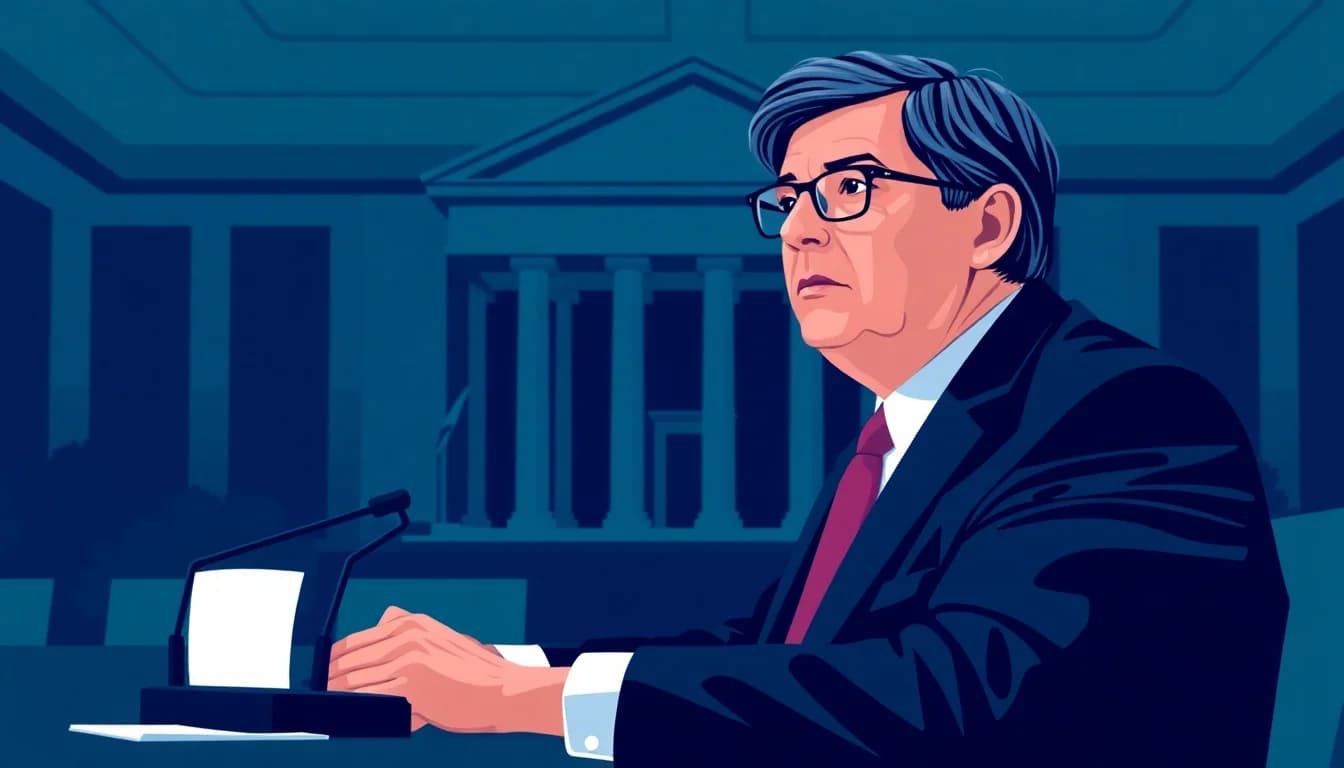
Kevin Warsh's first meeting as Fed Chairman focuses on communication strategy, with expectations of a more hawkish tone amidst inflation concerns.
Investors are keen to see how the new chairman will reshape the Federal Reserve's messaging.
The Federal Reserve is expected to maintain its current benchmark interest rates during its first meeting under Chairman Kevin Warsh, which is set to conclude today. Market analysts are particularly focused on how Warsh will adjust the Fed's communication style rather than the interest rate decision itself.
The consensus indicates the Fed will keep its fed funds rate steady at 3.50%-3.75%. However, Bank of America analysts predict that Warsh will adopt a more hawkish tone, potentially eliminating any language suggesting future rate cuts and emphasizing the risks associated with inflation. This shift comes amid unexpectedly strong economic data and rising inflation concerns.
Warsh has long criticized the Fed's reliance on forecasts and forward guidance. His advice to the central bank was clear: "Stop talking so much. More thinking, less talking." This philosophy may influence the discussions at the meeting, with speculation that he might refrain from providing his own projections for the Fed's Summary of Economic Projections (SEP), further distancing himself from traditional forecasting methods.
Bank of America expects that the SEP will indicate no changes in rates through 2026, with modest reductions anticipated in 2027 and 2028. Additionally, the bank anticipates that officials will acknowledge increasing inflation risks and show less tolerance for price fluctuations than in previous years.
Warsh's first press conference as chair is highly anticipated. Analysts expect him to adopt a measured approach, suggesting that current inflation pressures, possibly linked to geopolitical events like the Iran conflict, may be temporary. However, he is unlikely to signal any imminent rate cuts.
Market participants remain divided on whether Warsh will take a more dovish or hawkish stance than his predecessor, Jerome Powell. Such uncertainty poses risks for investors, as a more hawkish Warsh could strengthen the dollar and exert pressure on stocks and bonds. Furthermore, there is speculation about whether Warsh will initiate a broader transformation in the Fed's communication strategies after years of increased transparency.
Bitcoin has seen a decline of about 25% year-to-date, dropping since Warsh's appointment on May 22, amid ongoing concerns related to the U.S.-Iran conflict and its impact on domestic economic policies.