In brief
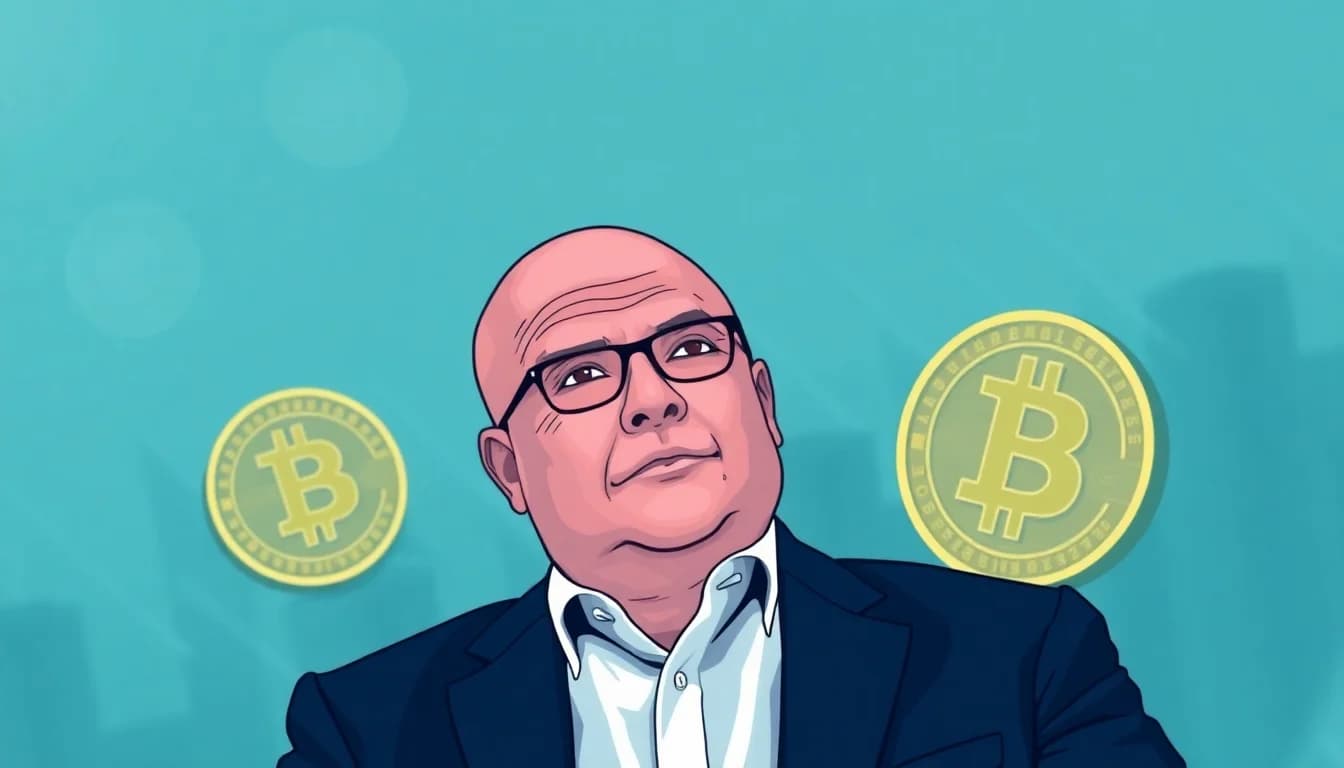
- Kevin O'Leary believes Bitcoin may soar to $1 million if the industry can address the quantum computing risk referred to as "Q-Day."
- O'Leary admitted that his previous belief that Bitcoin and Ethereum would dominate the crypto landscape was misguided, now anticipating that various industries will select their own blockchains based on preference.
- Rather than focusing on specific AI models, O'Leary is investing in the energy infrastructure supporting them, including a new investment in uranium to support next-gen nuclear reactors.
In a bullish outlook, investor and "Shark Tank" personality Kevin O'Leary has forecasted that Bitcoin could reach an astonishing $1 million, contingent upon overcoming significant challenges.
During an interview on The Rollup podcast at the Avalanche Summit in New York, O'Leary remarked that Bitcoin's journey to a million hinges on resolving a major risk: quantum computers that could potentially compromise the encryption that secures the entire cryptocurrency framework. Until this issue is addressed, he suggested that institutions will likely view Bitcoin more as a novelty than as a fundamental asset.
Myriad: Where does Bitcoin go next? Click to make your prediction.O'Leary made a memorable entrance at the summit, showcasing an $11 million baseball card as a statement piece.
The investor was adorned with a unique Shohei Ohtani collectible, encased in a Tiffany-designed holder featuring 110 carats of diamonds and 2.2 pounds of white gold. His collecting group acquired the card for a record price this year, using it as a prop to illustrate his points on the podcast.
"This asset class should be on-chain," O'Leary stated, displaying the card for emphasis. "And it is on a chain right now. But it should be on blockchain."
THE KEVIN O’LEARY INTERVIEW.@kevinolearytv @robbieklages @andyyy
Timestamps:
00:00 Intro
00:41 Kevin Wears $11M Ohtani Card
02:27 Tokenization Becomes The 12th S&P Sector
03:09 Kevin Was Wrong About ETH
05:30 One Exchange Will Win
07:18 Kevin Buys Uranium In His Portfolio… pic.twitter.com/xU0MhCvE68— The Rollup (@therollupco) September 17, 2026
His discussion wasn't limited to collectibles. This week, the U.S. Securities and Exchange Commission introduced its "Innovation Exemption," allowing authorized platforms to trade tokenized stocks—digital representations of shares that operate on a blockchain rather than through traditional exchanges. O'Leary sees a connection between this regulatory development and his high-value necklace.
"This sector, whether you call it crypto or digitization, is poised to become the 12th sector of the S&P," he asserted, as it serves all existing sectors. He adheres to a strategy of limiting no more than 5% of his portfolio in any single stock and 20% in one sector, although crypto has occasionally accounted for as much as 23% of his investments over the past seven years.
Previously, O'Leary's investment strategy was straightforward: purchase Bitcoin and Ethereum to capture the majority of the industry's volatility, assuming that Ethereum would become the standard. This assumption has not materialized.
"People aren't satisfied," he noted. "Who's next? What other chain will gain traction?" His current perspective suggests that entire industries will choose their own blockchains, similar to how sports memorabilia might settle on Avalanche while stock exchanges may opt for different platforms altogether.
"I don't believe Ethereum will be the choice anymore," he remarked. "I find it neither fast enough nor secure enough. That’s just my personal view."
O'Leary's perspective implies that whichever blockchain a major exchange adopts for tokenization will likely see its token value surge, becoming essential for future transactions.
Investing in Infrastructure Rather Than Models
Another key area of focus for O'Leary is artificial intelligence (AI). He aims to avoid the pitfalls he encountered with Ethereum by not speculating on which AI model will prevail. Instead, he is directing his investments toward the energy grid that supports AI technologies.
"AI cannot function without power," he emphasized. His portfolio includes BitZero, which transitioned from Bitcoin mining to becoming a Nasdaq-listed power company, with operations in Norway and Finland, as well as private projects in Alberta and Utah. For the first time, he is also investing in uranium, the essential fuel for nuclear reactors.
O'Leary believes that small modular reactors—compact nuclear facilities that can be constructed more swiftly and in smaller footprints than traditional power plants—are set to be deployed in U.S. data centers, and these reactors require uranium. "It’s wise to invest in the foundational elements of that strategy," he advised.
He also appears to support an optimistic view of technology's future. "There’s no way there will be a slowdown in AI development," he asserted. "Are we really going to let the Chinese surpass us? That won’t happen." When asked to choose between a dystopian or utopian outlook for AI, he confidently stated, "I’m in favor of curing cancer."
The Quantum Challenge for Bitcoin
Then came the pivotal question: Will Bitcoin ever reach $1 million? O'Leary remains optimistic.
"It will," he stated, "if it can overcome the uncertainties surrounding quantum computing, particularly the threat of breaking the algorithms and encryption that secure the network"—referring to the hypothetical scenario where a sufficiently powerful quantum computer could compromise Bitcoin wallets, a moment dubbed "Q-Day."
"Some investors are hedging their bets by supporting companies developing quantum computing security solutions, which is also a blockchain-related investment," he added.
No quantum computer capable of executing such an attack currently exists, and predictions regarding their emergence range from the early 2030s to possibly never. However, the threat is influencing institutional investment strategies: O'Leary has noted that this concern is why large funds limit Bitcoin exposure to about 3% of their portfolios, viewing it more as a speculative asset akin to gold rather than a foundational investment, a timeline that a recent Google research paper suggested could occur sooner than anticipated.