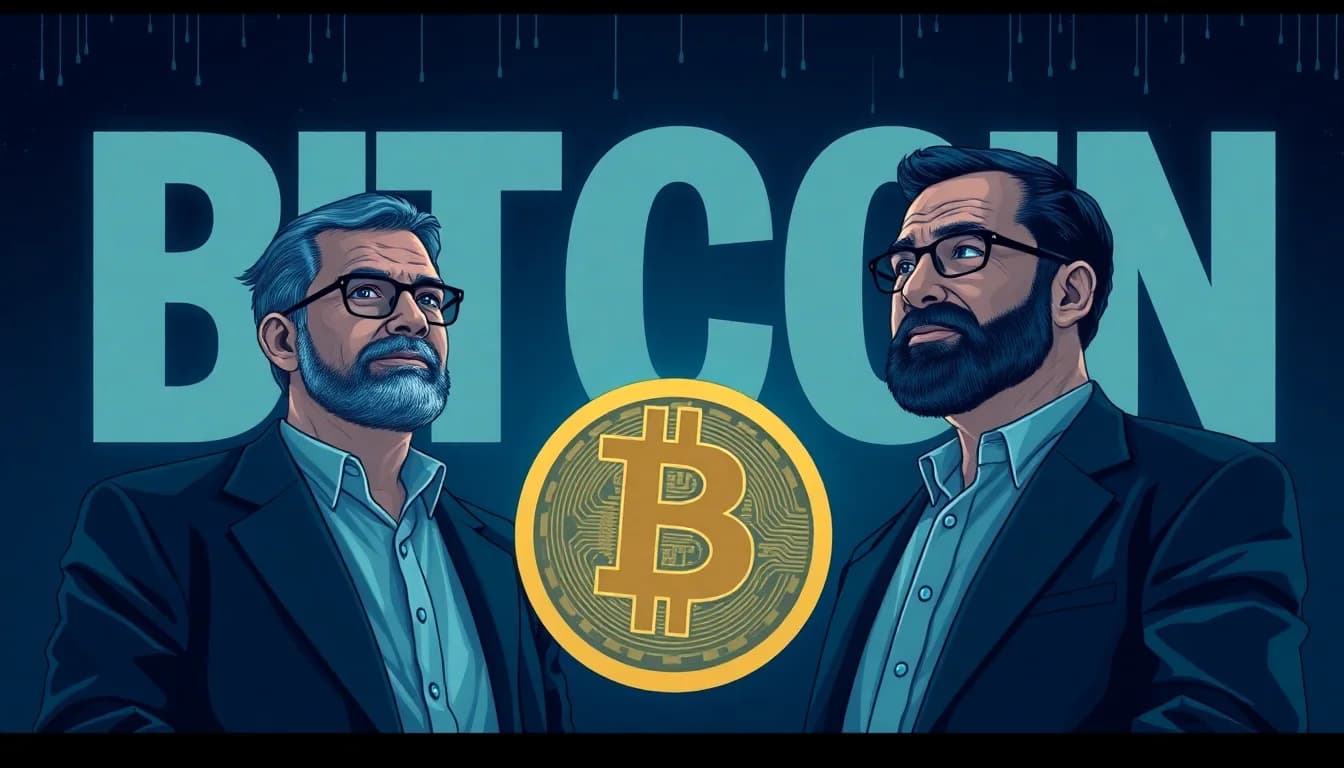
Satoshi Nakamoto is the pseudonym used by cryptographers Hal Finney and Len Sassaman, according to the new documentary Finding Satoshi, released on April 22.
The answer to the greatest financial mystery of our time.
— Finding Satoshi (@findingsatoshi_) April 22, 2026
Finding Satoshi, available now only at https://t.co/latbrWNjit pic.twitter.com/toxrj7fmXl
Directors Tucker Tooley and Matthew Mile conducted a four-year investigation led by American business writer William D. Cohen and private investigator Tyler Maroni.
One of the film's key arguments is the analysis of the digital activity of the suspected candidates. The creators compared Satoshi's online behavior patterns with those of notable figures in the early crypto community, concluding that Finney and Sassaman fit the profile best.
According to the investigation, Finney was responsible for the code and technical implementation, while Sassaman handled the textual and academic aspects of the project, including the white paper.
The film features dozens of interviews, including with Bill Gates, Gary Gensler, Michael Saylor, Joseph Lubin, and Fred Ersam.
Finding Satoshi, April 22nd pic.twitter.com/VZDNiD3Mhs
— Finding Satoshi (@findingsatoshi_) April 4, 2026
What Points to Finney and Sassaman
The filmmakers presented several indirect pieces of evidence supporting Finney, who was the first recipient of Bitcoin from Satoshi, including:
- his involvement in creating RPOW, a key precursor to the first cryptocurrency;
- his reputation for easily working with various programming languages.
The directors also noted a gap in his activity in the repository: between the publication of the white paper in October 2008 and the launch of the main network in January 2009. They believe this was when Finney could have been working on Bitcoin.
For Sassaman, the film provided different arguments: his academic writing style, connections with cypherpunks, and expertise in anonymity.
The investigation also highlighted that, like Satoshi, the cryptographer used British English forms and deliberately anonymized his texts stylistically, complicating attempts to establish authorship of the white paper through linguistic analysis.
The Co-authorship Theory
An important detail in the co-authorship theory is the confirmed connection between the two figures. Finney and Sassaman knew each other, worked in the PGP environment, and maintained contact in 2008, during the creation of Bitcoin, the filmmakers noted.
The film also addressed one of the main counterarguments against the Finney theory.
Previously, researcher Jameson Lopp pointed out that at one point, Satoshi corresponded with a developer while he was participating in a race. In Finding Satoshi, this episode was interpreted not as a refutation but as a possible argument for the two-authors theory: one could focus on coding while the other handled public communication.
The film also featured the widows of both alleged Bitcoin co-authors. Fran Finney suggested that her husband might have participated in the cryptocurrency's development, primarily in coding and editing texts.
Sassaman's wife, Meredith Patterson, found the theory plausible and confirmed that the cryptographers were in contact during the coin's launch.
These Are Just Theories
Tooley and Mile emphasized that the film does not claim to have definitively solved the identity of Nakamoto. They referred to the conclusions presented in Finding Satoshi as merely a theory.
The documentary offered one of the most detailed explanations for why the early coins of Bitcoin's creator (around 1.1 million BTC) remain untouched: both alleged authors have already passed away.
The industry's reaction to the film's conclusions has been measured, though at times positive. Coinbase CEO Brian Armstrong called it "the most thoughtful" analysis of the topic he has seen and suggested that the filmmakers might have arrived at the correct answer.
The Finding Satoshi documentary is the most thoughtful take on this subject I've seen out there.
— Brian Armstrong (@brian_armstrong) April 21, 2026
It's coming out tomorrow, but Coinbase users can get early access today. Open your Coinbase app to find out more! pic.twitter.com/dN15Y8VZBU
Not everyone supported the new theory. A community member using the pseudonym Cam noted that Sassaman did not know C++ and had never worked on a Windows machine.
Len Sassaman didn't know C++ and never owned a windows machine. This according to his wife.
— Cam (@noremacback) April 22, 2026
He also was a vocal critic of Bitcoin.
“Additionally, Sassaman was a prominent critic of Bitcoin,” he added.
This was echoed by well-known cryptographer and cypherpunk Adam Back, who was previously named by journalist John Carreyrou of the NYT as a creator of the first cryptocurrency.
however Hal did help satoshi as he was an early user and submitted bug reports. not the same thing as co-author, and that Fran the way i heard it said it was not Hal. plus @nathanielpopper (also @nytimes) and author of "digital gold" book, got to meet with @halfin and was shown
— Adam Back (@adam3us) April 22, 2026
“Hal did indeed help Satoshi as an early user, submitting bug reports. But that’s not the same as co-authorship. And Fran, as I heard, said it was not Hal. […] The theory that Len and/or Hal were Satoshi, while leaving their families without Bitcoins (and Hal had significant medical bills) and/or putting them at risk, doesn’t sound very convincing,” he noted.
It’s worth noting that in April, Back expressed doubts about Nakamoto's billion-dollar fortune and suggested that the Bitcoin creator might have lost the private keys.