Summary
- A presentation from Flock reveals plans for a partnership with Nexar to utilize approximately 350,000 Uber, Lyft, and delivery dashcams for license plate scanning.
- Flock claims the agreement with Nexar was never finalized; it remains uncertain if drivers or the apps were aware of the initiative.
- This proposal emerges as Flock is dealing with the termination of a contract with the LAPD, multiple officer misconduct cases, and increasing legislative scrutiny.
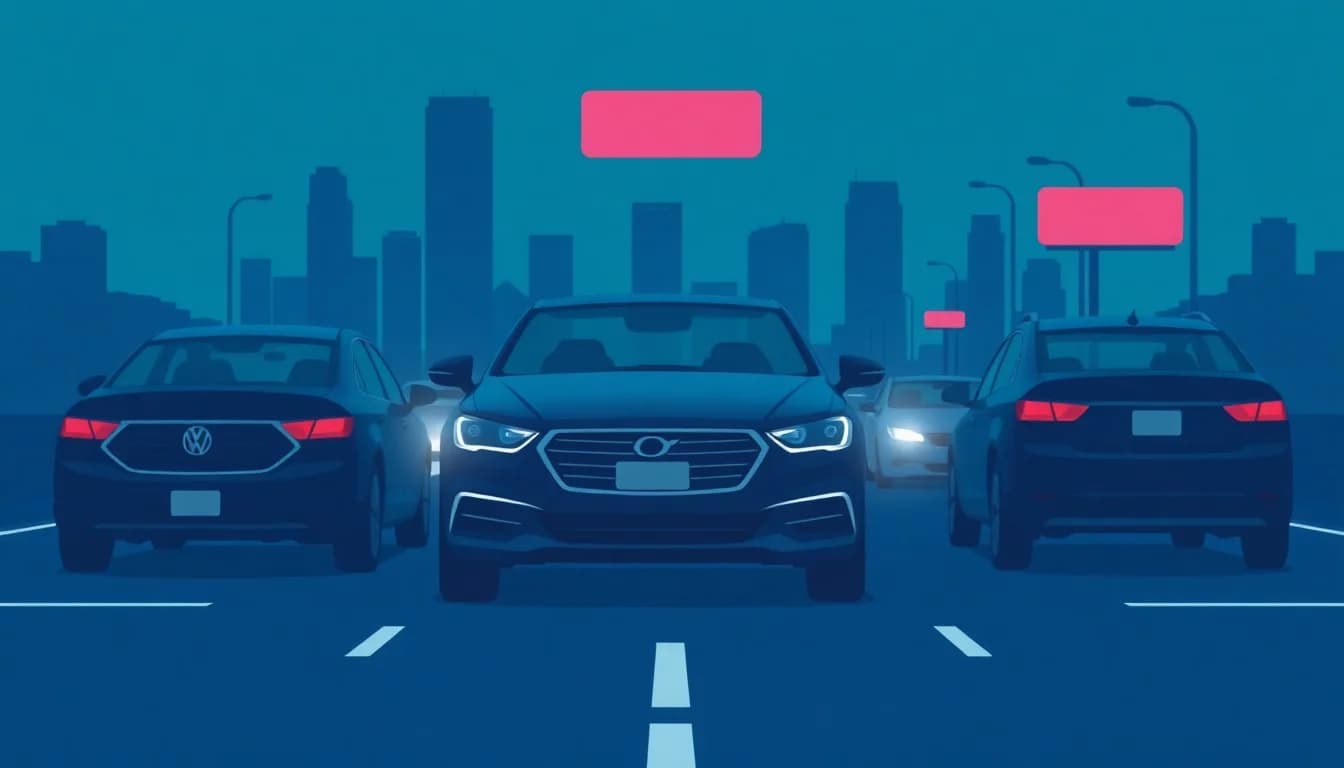
Flock Safety, a controversial provider of law enforcement technology, aimed to transform every Uber, Lyft, and delivery vehicle into a mobile license plate reader.
A document created for the Georgia Attorney General's office, later shared with 404 Media, outlines a strategy to deploy dashcams from Nexar, which are already installed in hundreds of thousands of vehicles, to capture the license plates of passing cars.
According to Flock, the Nexar collaboration was never put into action, yet the proposal highlights the extent of the company's ambitions.
Typically, Flock's product consists of stationary cameras mounted on poles that record the license plate, color, make, and model of every car that drives by, creating a searchable map of vehicle movements. These installations have sparked significant controversy in communities, leading some individuals to vandalize or cover them in protest.
The Nexar initiative would have liberated these cameras from fixed locations. Instead of a single camera monitoring one intersection, 350,000 vehicles would have been equipped with cameras, bridging gaps between static sites and monitoring license plates across vast areas in real-time.
Axon provides a similar mobile version for police vehicles, while Motorola's DRN and Vigilant utilize repossession agents' cars for the same purpose. Flock's vision was to implement this concept on a civilian scale.
In April, Flock achieved an $8.4 billion valuation, and its stationary cameras now operate in over 5,000 communities across the U.S. However, the landscape is changing for the company. In July, the LAPD allowed its contract with Flock to lapse, citing "serious concerns" regarding civil liberties and privacy.
CNN reported on more than two dozen instances where officers resigned or were arrested for alleged misuse of Flock's license plate system. The timing of the proposal for a 350,000-car expansion coincided with increasing criticism of the company's existing operations.
The opposition extends beyond local responses. The advocacy organization EPIC called on Congress in May to impose a ban on automatic license plate readers, with various states taking action independently: Washington passed SB 6002 to limit the use of Automated License Plate Recognition (ALPR), and California is considering a bill to restrict data sharing. Additionally, Decrypt previously highlighted a proposed House bill mandating warrants for governmental AI surveillance.
Moreover, the deployment of Flock's cameras at federal buildings has faced substantial opposition, with critics arguing it could infringe upon civil rights.
I will soon introduce a bill to withhold federal funding from municipalities and police departments that implement Flock (and similar) cameras to surveil law-abiding citizens. pic.twitter.com/FGzE69psxS
— Thomas Massie (@RepThomasMassie) July 25, 2026
On the legal front, a federal judge permitted a lawsuit from Norfolk alleging that Flock's cameras violate the Fourth Amendment to proceed, referencing the Supreme Court's Carpenter v. United States decision regarding warrantless tracking.