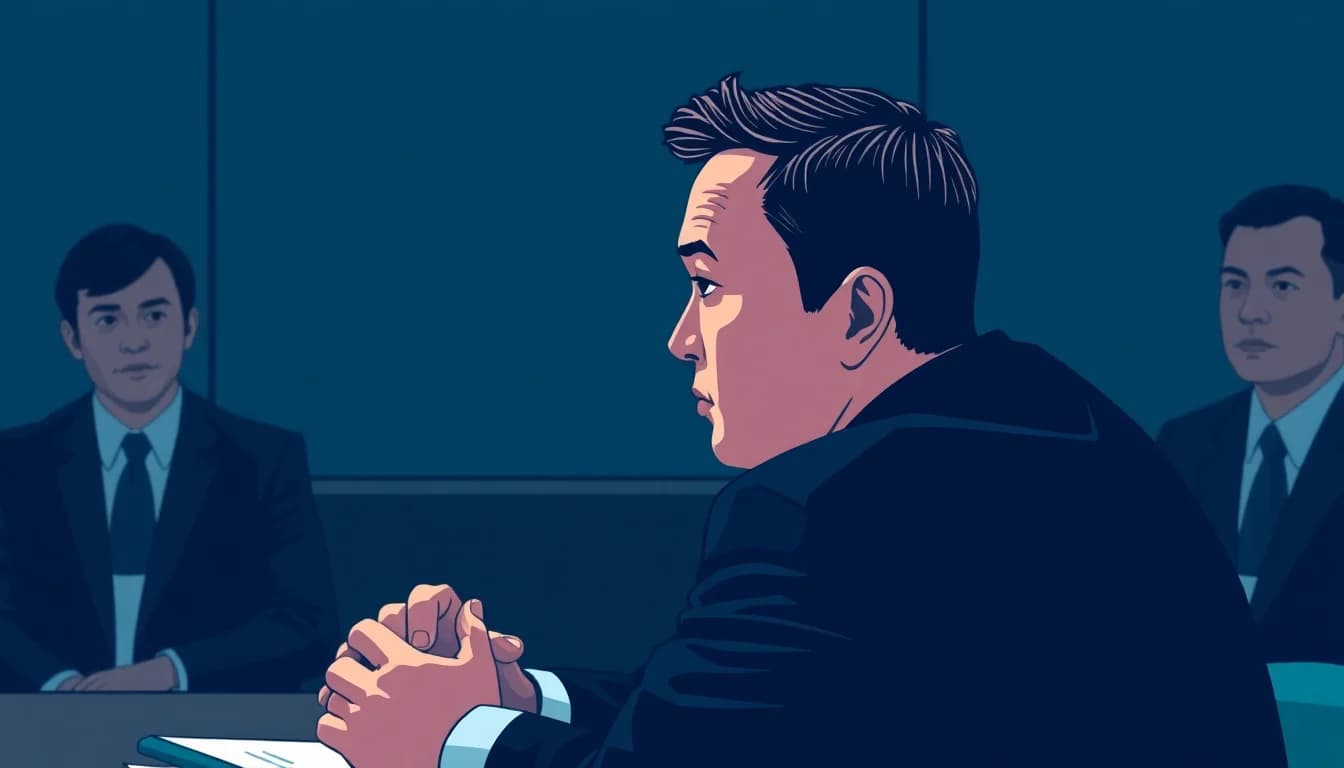
On April 28, the trial began regarding Elon Musk's lawsuit against OpenAI and its co-founders, Sam Altman and Greg Brockman. This was reported by Bloomberg.
The case stems from a long-standing conflict among the parties: all three founded the company in 2015, but their paths diverged over time.
Musk argues that OpenAI's shift from a non-profit to a commercial entity was a mistake and set a dangerous precedent for similar projects.
"You can't steal from a charity, that's my opinion," the billionaire told jurors at the start of the trial in federal court in Oakland, California.
According to Musk, the implications of the lawsuit extend far beyond the individuals involved. If Altman and Brockman's actions are not deemed wrongful, "this will set a precedent for the looting of all charitable organizations in America."
OpenAI's attorney, William Savitt, stated that Musk's lawsuit is an attempt to undermine the position of his main competitor, xAI. He claimed that the billionaire himself supported the commercial transformation in the early years of the startup.
The outcome of the three-week trial could determine OpenAI's future, as the company prepares for one of the largest IPOs in history.
Musk is seeking to overturn the restructuring.
Musk's Accusations
During his initial testimony, Musk focused on recounting his business ventures—Zip2, PayPal, SpaceX, Neuralink, and Tesla. He emphasized that he has long been interested in artificial intelligence but has always been wary of its potential.
He stated that AI could significantly contribute to societal advancement while simultaneously posing existential risks.
Around 2015, Musk discussed the technology's possibilities "with everyone and anyone" and shared his concerns. One of his interlocutors was Google co-founder Larry Page, who "did not pay enough attention to AI safety."
Musk concluded that a counterbalance to Google’s technology was necessary, as the corporation was then leading in AI development and had "all the money, computers, and talent."
"I thought: what could be the opposite of Google? Open source, a non-profit organization," Musk said.
Musk's attorney, Stephen Molo, told the jurors that the trial would demonstrate that Altman and Brockman exploited Musk's money, reputation, and advice to launch OpenAI, only to abandon the principles of working for the public good and use the project for personal gain.
Molo claimed that Microsoft became a conscious accomplice in this "betrayal," having invested $13 billion in OpenAI since 2019—one year after Musk left the startup's board.
Defense Arguments
Savitt noted that in the first year of OpenAI's existence as a non-profit research lab, Musk wrote:
"It might be better to create a standard C corporation with a parallel non-profit organization."
The following year, he stated:
"Given the progress made by DeepMind, creating OpenAI as a non-profit organization may have been a mistake."
In 2017, Musk and other startup employees realized that the company needed significantly more funding for computational resources. After "dozens of meetings," they agreed that a commercial division was necessary.
"During these lively discussions in 2017, Mr. Musk never expressed the opinion that OpenAI should remain strictly a non-profit organization. On the contrary, the opposite was true," Savitt stated.
The attorney noted that the billionaire "wanted to turn the startup into a full-fledged commercial company and establish absolute control over it, but the other co-founders refused to hand over control of AI developments to one person."
Musk's Response
In court, Musk stated that he was always open to creating a commercial "subsidiary"—provided profits were capped and funds directed to a non-profit organization.
One proposal involved equally distributing shares of the commercial entity among four key executives: Musk, Altman, Brockman, and Ilya Sutskever. Musk found this unfair since the funding came from him. He expected to obtain a controlling stake in the company.
What's Next
The jurors will hear from several high-profile witnesses and review years of correspondence and corporate documents. Based on the testimonies, they will issue a recommended verdict—the final decision will rest with Judge Gonzales Rogers.
Recall that in October, the startup OpenAI completed its restructuring, during which the company was divided into a commercial corporation and a non-profit fund.