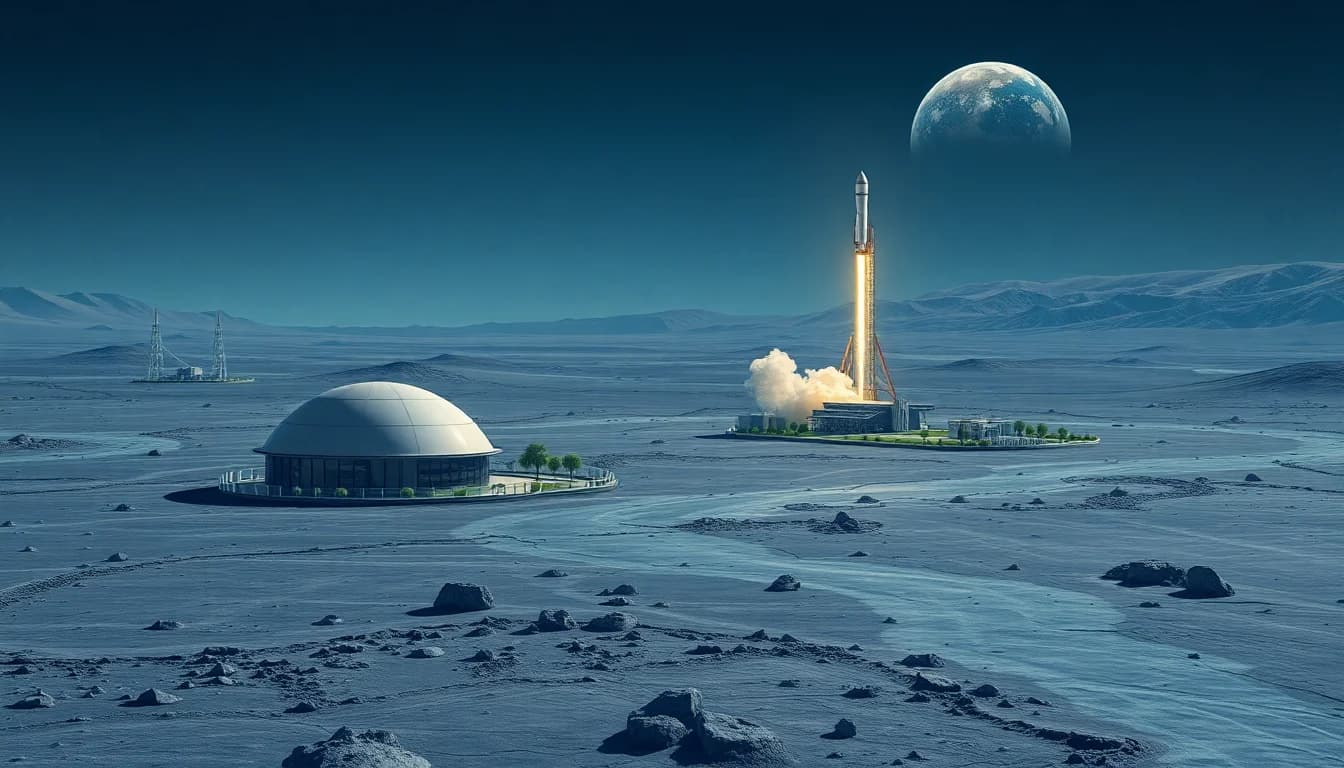
SpaceX has shifted its focus to building a "self-sustaining city" on the Moon, with CEO Elon Musk stating that it could be completed in less than 10 years.
For those unaware, SpaceX has already shifted focus to building a self-growing city on the Moon, as we can potentially achieve that in less than 10 years, whereas Mars would take 20+ years.
— Elon Musk (@elonmusk) February 8, 2026
The mission of SpaceX remains the same: extend consciousness and life as we know it to…
Musk noted that colonizing Mars would take over 20 years, which is twice as long.
“The mission of SpaceX remains unchanged: to extend consciousness and life as we know it to the stars,” the billionaire emphasized.
He explained that traveling to Mars is only feasible when the planets align, which occurs every 26 months, with the journey taking about six months.
In contrast, trips to the Moon can happen every 10 days, with a travel time of just two days, making the lunar city project much quicker to realize.
Musk stressed that SpaceX has not abandoned its plans for a Martian city, which could start in 5 to 7 years. However, the primary focus is on "ensuring the future of civilization," and the Moon is better suited for this goal.
Musk's Promises
In the comments, users pointed out that Musk had promised in 2012 to send a person to the "Red Planet" within 10 years.
Source: X.Since founding SpaceX in 2002, Musk has identified Mars colonization as the company's main goal. He has consistently promoted the idea of creating an autonomous settlement as a safeguard for humanity against global catastrophes at conferences and employee events.
In May 2025, Musk announced plans for the first unmanned Starship landing on Mars by the end of 2026.
These plans contrast with NASA's strategy, which focuses on returning astronauts to the Moon by 2028. Musk has repeatedly criticized this approach.
The shift in SpaceX's focus occurred shortly after its merger with X. The new key objective is to deploy data centers beyond Earth.
“Modern advancements in artificial intelligence rely on large terrestrial data centers that require vast amounts of energy and cooling. The global demand for electricity simply cannot be met with Earth-based solutions without harming people and the environment,” he wrote.
In February, SpaceX requested permission from the U.S. Federal Communications Commission to launch a constellation of 1 million satellites for data centers in orbit.