Summary
- Technological advancements like brain implants, AI glasses, and advanced prosthetics are starting to turn cyberpunk's futuristic concepts into reality.
- R.U. Sirius, co-founder of Mondo 2000, notes that the actual future is more mundane than initially envisioned.
- Media scholar Shira Chess believes cyberpunk's primary caution was about corporate dominance rather than technological aesthetics.
For many years, the cyberpunk genre of science fiction depicted a future filled with chrome-armored mercenaries, cyberspace cowboys, and hackers opposing multinational corporations. Now, four decades later, we find that many elements of this envisioned future have materialized, albeit in unexpected forms.
Technologies such as Neuralink, AI-driven smart glasses, and more advanced robotic prosthetics are beginning to bridge the gap between science fiction and reality. Concurrently, several tech giants, including OpenAI, xAI, Anthropic, Meta, and Google, are shaping the communication and interaction landscape for billions of individuals through artificial intelligence.
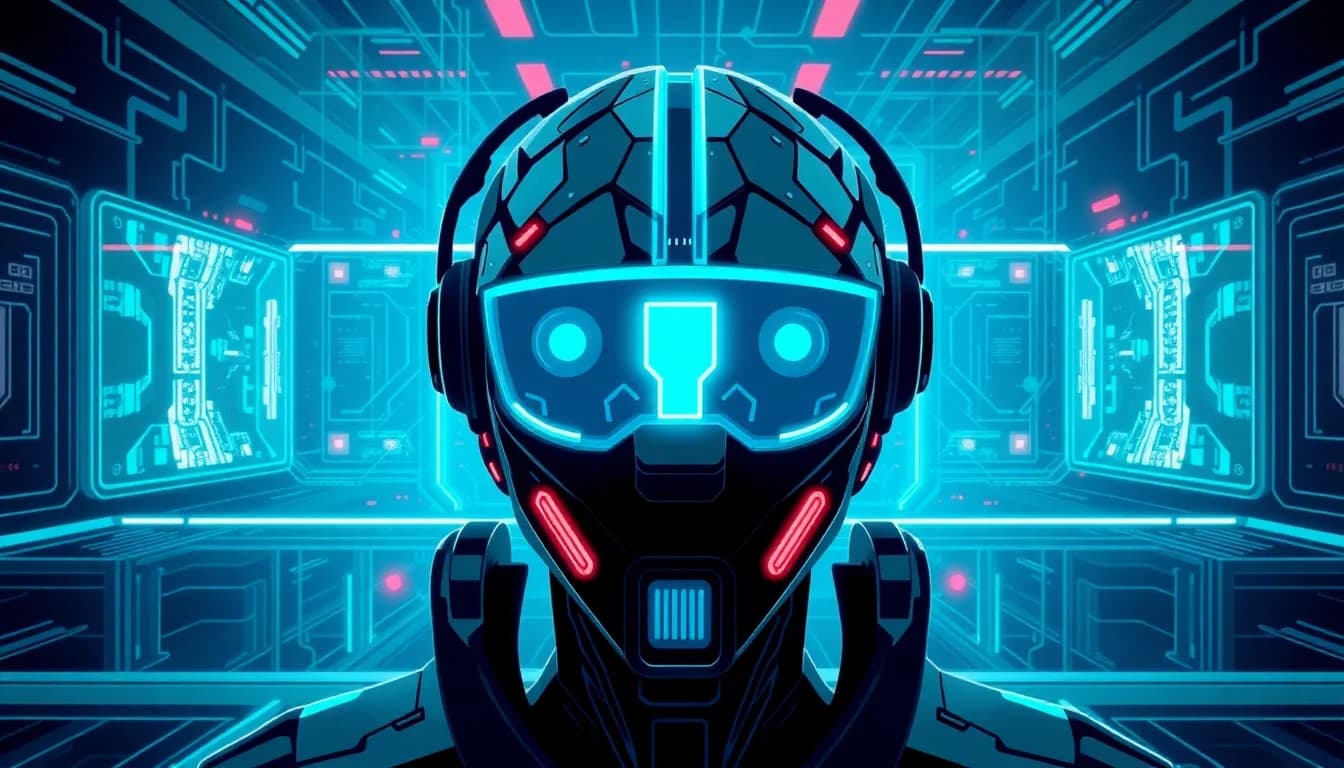
Cyberpunk inherently combines innovative technology with a rebellious ethos derived from the punk movement, creating a vision of "high tech, low life," a phrase popularized by author Bruce Sterling. This juxtaposition highlights remarkable advancements alongside widespread poverty, crime, corruption, and corporate power. Works like William Gibson's Neuromancer, Neal Stephenson's Snow Crash, Ready Player One, and Cyberpunk 2077 imagined a world dominated by rogue AI, immersive virtual worlds, and mega-corporations like Arasaka and Militech, which wield power comparable to that of governments.
For those involved in shaping internet culture during the late 1980s and 1990s, these narratives often felt less like ominous forecasts and more like templates for potential technological evolution.
How surfacing on the internet was imagined in Johnny Mneumonic (1995) pic.twitter.com/sbD1YX0Uyi
— Old Internet (@OldInternetFeel) June 25, 2026
Ken Goffman, known as R.U. Sirius and a key figure behind Mondo 2000 as well as co-author of the Cyberpunk Handbook, recalls cyberpunk as a period characterized by exploration and hope.
"Despite the darker elements, there was a sense of playfulness in Mondo," Goffman shared with Decrypt. "If dystopia was imminent, it felt more like a mental exercise we could engage with and find humor in at that time."
He believes the actual future has turned out to be considerably less dramatic than envisioned. "Some people still think an apocalyptic scenario will be thrilling like 'Mad Max,' but the reality is often tedious and uneventful," he remarked.
Initially, many early internet innovators were optimistic that personal computing and networking would redistribute power from governments and corporations. “We thought they were somewhat benevolent,” Goffman reflected. “They were granting us this power, and we were ready to experiment with it—perhaps even to overthrow them, disrupt the government, and change everything.”
In reality, however, many of the entities that developed these technologies emerged as some of the most influential organizations globally. "That was one of the miscalculations in our thinking; it wasn't just going to get worse," he said.
Goffman also observed the erosion of one of the internet's defining traits: anonymity. "Facebook forced me to abandon my name R.U. Sirius in favor of Ken Goffman," he noted. “That felt like a significant turning point.”
Reflecting on the past, he questions whether the cyberculture movement contributed to the creation of an internet that its founders would hardly recognize today. "Did we disrupt the consensus on reality? Did we also dismantle reality and truth?" Goffman pondered.
For Shira Chess, a professor at the University of Georgia and author of The Unseen Internet, the enduring significance of cyberpunk lies not in its visual appeal but in its insights regarding power dynamics. "We focused on the glamorous aspects without considering the implications of those elements," Chess stated to Decrypt. "The allure suggested by cyberpunk always exists within a dystopian framework."
She argues that the core prediction of cyberpunk was not about cybernetic enhancements or stylish accessories. "What we failed to confront was the moment when corporations fully seized control over digital environments," she stated. "At that point, we were finished."
While the internet remains largely open and accessible, an increasing portion is now behind paywalls, proprietary AI systems, and closed ecosystems dominated by a few corporations.
Chess identifies a similar trend with artificial intelligence. Instead of worrying about sentient machines, her concern lies in societal discourse surrounding them. In November 2022, Elon Musk cautioned that humanity might be “summoning the demon.” At an MIT event in 2014, he likened AI developers to magicians attempting to conjure spirits.
"I don't believe there's a demon lurking within AI," Chess asserted. "However, the more we act as if there is, the harder it will be to convince future generations that there isn't one."
Nevertheless, she recognizes signs of a new cyberpunk resurgence, citing the growing interest in cyberdecks, which are custom-built computers made from recycled components, open-source software, and readily available parts, as efforts to regain control over personal technology.
“I hope that cyberpunk experiences a revival, and that perhaps this trend towards cyberdecks represents an initial step in that direction,” she expressed, viewing them as a means to envision technology that isn’t as tightly controlled as it currently is.
This philosophy also extends to software development. As AI coding assistants become more prevalent, Chess fears that developers may become increasingly disconnected from the systems they depend on. "The more one relies on these tools, the less likely they are to understand the underlying systems," she warned. “To effectively resist, they must learn to code and create solutions that aren't reliant on corporate control.”
Chess also observes a resurgence of the conflict central to cyberpunk in today's world. Groups like Stop the AI Race, Machine Intelligence Research Institute, and local organizations have increasingly protested new AI data centers due to concerns regarding water consumption, energy usage, and environmental repercussions. Simultaneously, open-source developers and privacy advocates have challenged the increasingly closed nature of AI ecosystems. Recently, AI agents such as OpenClaw and Hermes Agent have empowered individuals with their own persistent, self-evolving AIs.
“The essence of cyberpunk lies in its need for a counterforce,” Chess noted. “For all those anti-hero vigilantes, there had to be a formidable adversary, primarily the corporate entities.”
The struggle to wield code against governmental and corporate oppression is also evident in the cryptocurrency and blockchain realm, with initiatives like Project Spartacus utilizing the Bitcoin network to archive the WikiLeaks Afghan War Logs. In 2023, it was revealed that a version of the Bitcoin Whitepaper was concealed within Apple’s macOS operating system.