The cryptocurrency sector's emerging political action committees are moving away from a bipartisan stance toward a stronger Republican alignment as they achieve political victories in Texas and other regions.
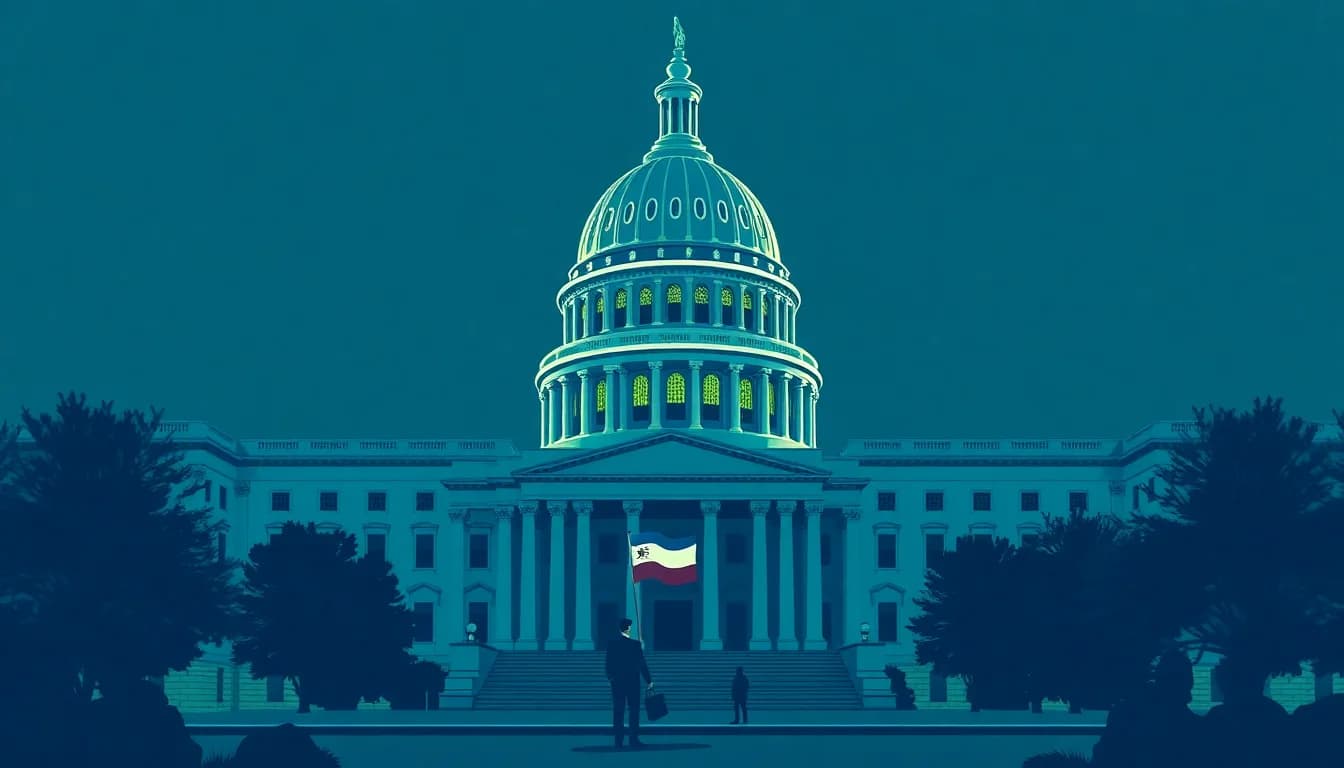
By Jesse Hamilton|Edited by Nikhilesh De May 27, 2026, 9:24 p.m. 7 min readMake preferred on Fairshake and other crypto PACs are gaining traction as new players lean into Republican backing. (illustration by Jesse Hamilton/CoinDesk)Key Points:
- The Fairshake PAC continues to dominate crypto election influence, achieving vital congressional campaign victories through substantial financial backing.
- New crypto PACs are emerging with a focus on Republican candidates, potentially undermining the bipartisan efforts cultivated over several election cycles.
- The recent Texas primary runoffs, highlighted by the defeat of long-standing U.S. Representative Al Green, a known critic of crypto, suggest that these PACs are becoming influential in shaping the next Congress.
The U.S. cryptocurrency sector is leveraging its financial power to unseat established incumbents and support new political allies in Texas and beyond as the midterm elections approach. However, the emergence of new political action committees (PACs) may challenge the industry's previously maintained bipartisan approach.
While Fairshake remains a principal channel for funneling millions into primary elections, other crypto PACs are gaining visibility, especially following the recent Texas primaries. The collective financial contributions from the crypto sector are already having tangible effects on the upcoming Congress.
The most recent Texas runoff elections showcased the increasing influence of the crypto sector in politics, with Fairshake successfully targeting and assisting in the removal of long-serving Democrat Al Green, a crypto critic, while one of the new PACs backed a Republican Senate candidate. The Fellowship super PAC, linked to Tether and Cantor Fitzgerald, contributed $500,000 to support Texas Attorney General Ken Paxton's campaign, resulting in a significant victory over an incumbent Republican.
In House races, where funding often determines outcomes, Fairshake invested $6.5 million to help U.S. Representative Christian Menefee advance, replacing Green. The newly established Blockchain Leadership Fund, funded by Anchorage Digital and Chainlink, also endorsed Menefee, who emerged victorious in a unique runoff between two incumbents due to redistricting and is favored to win the general election in his predominantly Democratic district.
Fairshake also supported several Republican candidates in Texas seeking House seats, including Alex Mealer ($453,000), Tom Sell ($426,000), Carlos De La Cruz ($607,000), and Jon Bonck ($348,000) — all achieving decisive victories in districts expected to favor Republicans in the upcoming elections.
Removing Al Green, who served on the House Financial Services Committee and was a vocal opponent of crypto, is perceived as a significant achievement for the crypto community. Green had consistently voted against crypto-friendly legislation and co-sponsored a bill aimed at prohibiting President Trump from engaging in personal crypto business interests.
Successes in the South
The recent victories in Texas complement a broader success for Fairshake, which invested $20 million to back candidates in primaries across Kentucky, Alabama, and Georgia. Two Republican candidates in those states, U.S. Representative Andy Barr and U.S. Representative Barry Moore, received support from Fellowship as well.
However, the industry has faced challenges, notably in Illinois, where Fairshake spent over $10 million attempting to defeat Lt. Gov. Juliana Stratton, who ultimately won her Democratic primary in March. This outcome indicates that a candidate critical of crypto may be heading to the Senate next year.
The crypto industry comprises numerous distinct policy organizations dedicated to lobbying and advocacy, yet the prominence of a single super PAC like Fairshake is remarkable. This dominance is largely due to the financial commitment of a few core crypto companies, particularly Coinbase, Ripple, and a16z.
Those managing Fairshake have consistently refrained from discussing their strategies and decision-making processes. A spokesperson declined to comment for this article. Nevertheless, Fairshake has built a notable track record by strategically supporting both Republican and Democratic candidates, utilizing two affiliate PACs: Protect Progress (for Democrats) and Defend American Jobs (for Republicans). These affiliates focus on bolstering primary wins, especially in districts where one party is dominant, as the primary often determines the general election outcome.
However, this year may see a shift in favor of the Republican faction, as indicated by recent Federal Election Commission filings showing increased funding for the Republican affiliate. Even if support for GOP candidates grows, Fairshake's focus remains on fostering pro-crypto policies rather than adhering to traditional political ideologies. The PAC promotes its favored candidates through advertisements that rarely mention crypto, instead focusing on whatever political messaging aids the candidate's election efforts.
Members of Congress, who are currently working on digital asset regulations, are acutely aware of the crypto industry's campaign financing. This includes a bipartisan initiative in the Senate to advance the Digital Asset Market Clarity Act, which is a key goal for crypto lobbyists. However, some new PACs do not appear to share the same bipartisan strategy.
Republican Orientation
The Winklevoss twins, Tyler and Cameron, established the Digital Freedom Fund with $21 million to support Republican candidates and President Trump’s crypto agenda, although this PAC has not yet made a significant impact on the political landscape.
Similarly, the new Fellowship PAC, which started with about $11 million—far less than the initially promised $100 million—has exclusively supported Republican candidates in several races. Most of the Republican candidates endorsed by Fellowship have received Trump's endorsement, with only two competing in races without the president's choice. The PAC's alignment with Trump's political agenda was suggested in its inaugural press release announcing its creation to support the administration's crypto policy initiatives. However, its chairman insisted on the PAC's intention to remain nonpartisan.
"Fellowship will also be providing bipartisan support," said Jesse Spiro, the PAC's chairman, during a presentation at Consensus Miami 2026 earlier this month. "It's not partisan. In that sense, it's going to be candidates that support innovation in the U.S., that support crypto, that support the ecosystem."
However, the specifics of its support remain uncertain. Although foreign entities are prohibited from directly participating in U.S. elections, the PAC has connections to Tether from its inception, with an anonymous press release claiming it would become a $100 million political powerhouse advocating for transparency. Since then, Tether executive Spiro took on the role of chairman, while the PAC's treasurer and initial major contribution came from Cantor Fitzgerald, Tether's financial partner managing its reserves.
Thus far, the PAC has spent millions on advertising for Republican candidates, with the largest expenditure of $629,000 going to Barr in Kentucky. These ads have been produced by Nxum Group, a firm co-founded by Tether U.S. CEO Bo Hines, who previously served as a crypto advisor to Trump. Nxum has launched several ads nationwide, some utilizing AI video production.
Spiro did not respond to requests for comments, and federal filings suggest the PAC may have exhausted most of its initial funds.
The industry's current Republican focus outside Fairshake coincides with the party's struggles in the upcoming midterm elections. The declining approval ratings for Trump have diminished the party's already fragile chances of maintaining its House majority next year. As a result, Republicans supported by the crypto sector in this election cycle may find themselves in the minority, potentially limiting their influence over crypto policy in the future.
Prediction markets on the Kalshi platform (whose own regulatory future may be affected by these election results) assign a 77% probability to Democrats winning the House majority. They estimate that the Democratic Party's path to securing enough Senate seats is more challenging, giving it a 46% chance of a majority in the Senate.
In line with the industry's early strategy of supporting candidates from both parties, the Blockchain Leadership Fund, backed by Anchorage Digital and Chainlink, has had a modest impact thus far, focusing on smaller, grassroots contributions directly to candidates’ campaigns.
Jennifer Holdsworth, chairwoman of the fund, expressed pride in endorsing several candidates who secured primary wins. She stated that the results indicate a clear preference among voters for leaders who prioritize digital asset innovation, job creation, and opportunities in the U.S.
Anchorage Digital has also provided funds to Fellowship. Kevin Wysocki, the crypto bank's policy head, emphasized that its involvement with both PACs reflects a commitment to fostering bipartisan outcomes. "Crypto’s largest legislative victories—like the passage of the GENIUS Act—have been achieved through the thoughtful leadership of lawmakers from both parties," he remarked to CoinDesk.
Other entities within the crypto space, such as the Solana Policy Institute and Multicoin Capital, have partially backed a different PAC—the Sentinel Action Fund—which has launched an aggressive $8 million campaign against Ohio Democrat Sherrod Brown, who has previously impeded crypto legislation as head of the Senate Banking Committee. Recently, it has also supported Republican Mike Rogers’ Senate campaign in Michigan with nearly $900,000 in expenditures.
Nonetheless, none of the other PACs come close to matching Fairshake's scale, which boasted $193 million in spending power before the election cycle commenced. It stands as the leading crypto campaign fund as well as a top super PAC across all political and industrial sectors in the U.S.
With the defeat of House veteran Green, Fairshake spokesperson Geoff Vetter stated that this serves as evidence that "anti-crypto sentiment has repercussions." This reflects the crypto industry's financial influence, even as lawmakers facing re-election grapple with crypto legislation issues.