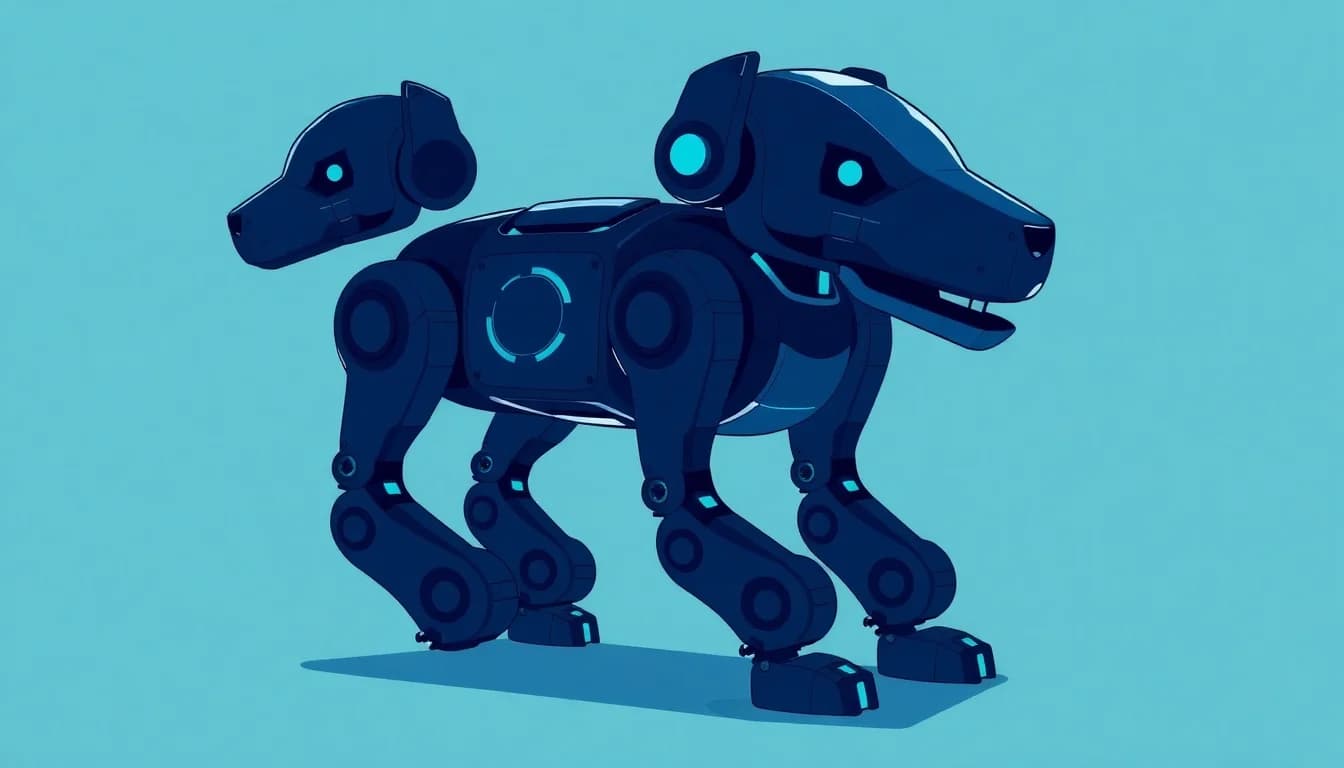
Anthropic has enhanced its Project Fetch with the Claude Opus 4.7 model, which completed programming tasks for a robodog at a rate 20 times faster than human engineering teams.
According to the New Frontier Red Team blog, Phase 2 of Project Fetch tests Claude’s programming capabilities for the robodog.
Opus 4.7 outperformed last year's top human team, which was supported by the older Opus 4.1, achieving speeds about 20 times greater. However, the robodog still struggled with basic tasks, such as fetching a beach ball.
— Anthropic (@AnthropicAI) June 18, 2026
In a previous test in August 2024, novices in robotics used AI to expedite their programming efforts. The latest tests, however, showcased Claude Opus 4.7's ability to function with minimal human oversight. The neural network autonomously:
- integrated video and LiDAR sensors;
- developed a manual control program;
- set up a navigation monitoring system;
- designed an object recognition algorithm.
Opus 4.7 proved to be 18 times faster than teams using earlier AI versions and 37 times quicker than human programmers without AI assistance. Additionally, it produced code more efficiently, with a size 10 times smaller than that generated by human teams.