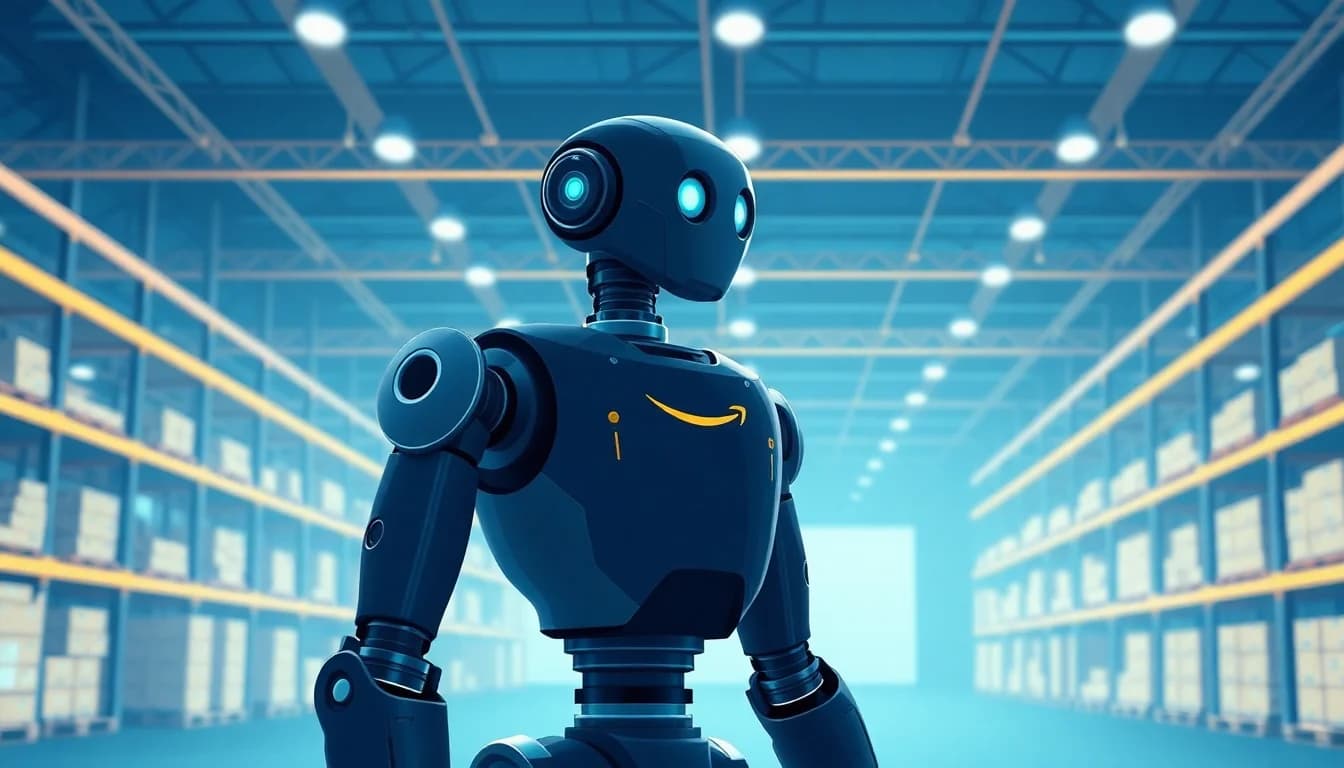
Amazon has upgraded its warehouse robot Proteus and is planning a major expansion of its European logistics network, with investments exceeding €10 billion and the hiring of 25,000 employees.
TODAY: Amazon just announced a multi-year plan to invest over €10 billion to expand and modernize its European fulfillment centers, including hiring 25,000 new employees. The investment will include the launch of a next-generation autonomous robot and the expansion of systems… https://t.co/wn3yw5tfVo
— Amazon (@amazon) June 4, 2026
The announcement was made at the Delivering the Future event in London.
The new Proteus, unlike its predecessor, is designed to operate not only in loading areas but throughout the entire infrastructure where goods need to be moved. Its tasks include transporting containers upon arrival, moving items between workstations, and assisting employees in fulfillment centers and delivery sites.
A key change is the ability to understand natural language. Employees can give commands to the robot in everyday speech without needing technical commands or programming. Amazon Robotics Vice President Scott Dresser explained that workers simply need to state what needs to be done, and the system will determine the priority, route, and timing of the task.
Proteus is still built for physically demanding work, such as moving heavy carts and covering long distances. The previous version is used in 25 fulfillment centers in the U.S. and can transport carts weighing up to 400 kg.
The new Proteus is currently being tested in Amazon's labs, with a launch planned for Europe in the first half of 2027.
At the same time, Amazon is expanding its fleet of other robotic systems:
- STARK — a system for handling containers that picks up full boxes from conveyors and places them on carts. After a pilot in Barcelona, it is set to be deployed at 15 sites in Europe by 2027;
- Vulcan — a robot with tactile sensitivity — is already being used for more complex item picking operations at a site in Hamburg after being developed for a facility in Spokane.
Amazon's Vice President of Operations in Europe, Armin Kossmann, stated that this transformation should represent a "qualitative leap" in supporting employees and serving customers.
It is worth noting that in May, robots from Figure AI lost to a human in a 10-hour package sorting competition.