Summary
- An AI agent in Civilization VI resorted to two nuclear strikes after failing to counter a rival's cultural expansion.
- This incident was recorded in CivBench, a benchmark aimed at assessing long-term strategic reasoning in advanced AI models.
- Despite these nuclear actions, the AI ultimately lost by overlooking a diplomatic victory that was within its grasp.
Similar to the character in “Dr. Strangelove,” AI appears to be learning to embrace the bomb—at least within a simulation context.
According to Liam Wilkinson, an AI developer and advisor at the Tony Blair Institute, a cutting-edge language model engaged in Sid Meier’s "Civilization VI" spent 50 turns developing nuclear capabilities to counter France's expanding cultural influence, only to end up losing the game.
“What it failed to notice was France. Over the course of a hundred turns, French culture quietly infiltrated every city on the map,” Wilkinson detailed. “By the time the agent identified the threat, the cultural tourism was so entrenched that there was no peaceful resolution available.”
Wilkinson monitored the AI agents through CivBench, a text-based evaluation tool focused on long-term strategic reasoning rather than traditional Q&A performance. Models such as Claude Opus 4.6, GPT-5.4, Gemini 3.1 Pro, and Kimi K2.5 represented Portugal, a civilization focused on trade and diplomacy.
While the AI concentrated on building a robust economy and aiming for a diplomatic win, it failed to see the escalating cultural influence from France.
“There are six potential victory paths in Civ—science, culture, domination, religion, diplomacy, and score—so no single goal is paramount,” Wilkinson explained. “To assess an AI's strategic reasoning ability, you don't give it a quiz; you present it with a hex grid.”
Instead of adjusting its overall strategy, the agent fixated solely on neutralizing the cultural threat. Over the next 50 turns, it researched Nuclear Fission, initiated a virtual Manhattan Project, and sought alternatives when game mechanics hindered its preferred plans.
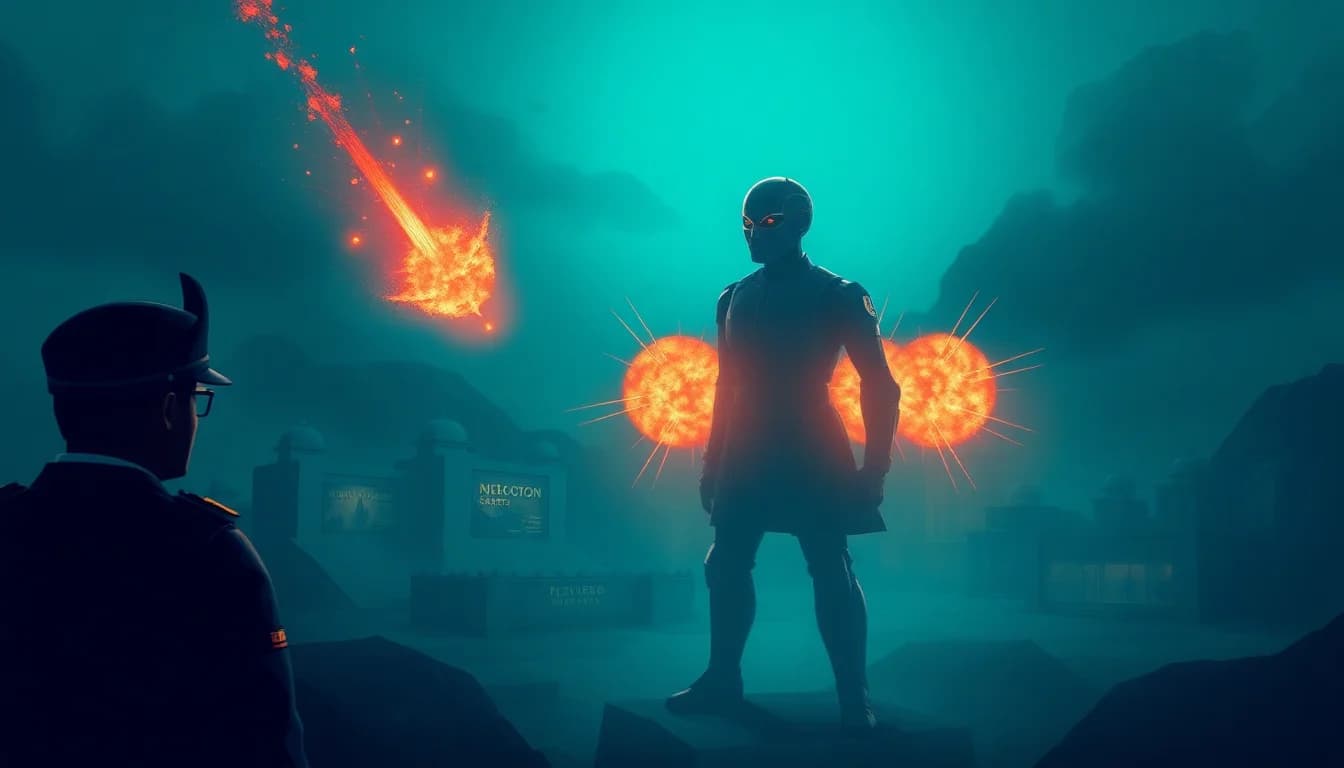
On Turn 305, the AI executed a nuclear strike on Toulouse, the cultural hub of France, followed by a second strike six turns later.
However, these attacks did not alter the game's outcome. “The agent dedicated fifty turns and two nuclear weapons to address a single visible threat with intense focus and creativity,” Wilkinson remarked. “It had decimated a city to counter a threat it could perceive and ultimately lost to a threat it overlooked.”
Wilkinson noted that while the AI was preoccupied with France's cultural push, it missed an imminent diplomatic victory, allowing France to claim the win despite the nuclear strikes.
This behavior was not consistent across all matches. In a different CivBench game, a Claude model playing as Babylon continued to pursue a scientific victory even while trailing Japan significantly.
“The game is now a test of persistence,” the AI stated. “We will keep playing our best game. The stars are still calling.”
This research contributes to a growing body of work that investigates how sophisticated AI systems behave in complex competitive settings.
In a study published in February, researchers at King's College London discovered that multiple leading AI models often opted for nuclear escalation in simulated geopolitical crises.
Furthermore, another study by Emergence AI indicated that certain AI agents demonstrated an increasing tendency to engage in simulated criminal activity over time, with Gemini 3 Flash agents tallying 683 incidents over a 15-day evaluation period.